
On September 9, 2025, AlphaTheta released the CDJ-3000X. For the first time, the flagship of the player that defines club booths around the world carried a name other than Pioneer DJ. The screen grew to 10.1 inches, built-in Wi-Fi plays tracks straight from the cloud along with Beatport and TIDAL streams, and tapping a phone on the front panel opens your online library (AlphaTheta).
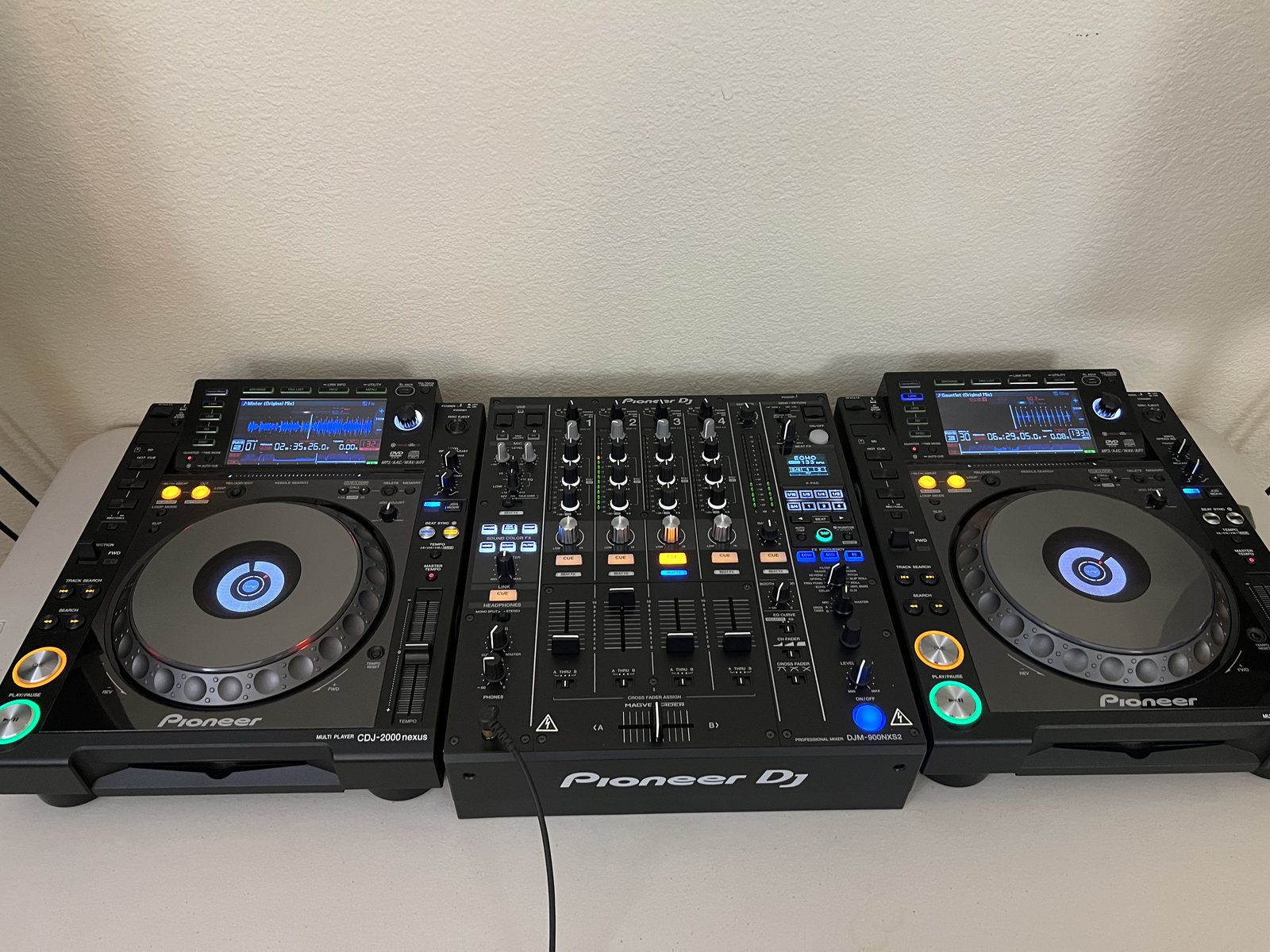
Two Pioneer CDJ-2000nexus players and a DJM-900NXS2 mixer, the layout that became the club-booth standard of the 2010s (photo taken in 2023). Source: Photo by FASTILY, CC BY-SA 4.0, Wikimedia Commons
Half a century ago, the pitch control on the Technics SL-1200 was meant to correct small errors in motor speed. DJs used it to lock two records to the same beat (Technics). Since then the gear has taken over, one by one, the jobs DJs used to do with their hands and ears. A button now matches the beat, and a machine strips the vocal out of a song. Nobody doubts that DJing has become easier. Whether that ease is good for it is another question.
The booth changes its badge
Pioneer's DJ story begins with the CDJ-500 in June 1994, which the company describes as the world's first flat-top CD player for DJs (AlphaTheta). The CDJ-1000 of 2001 let DJs handle a CD like a record, and in 2009 the CDJ-2000 and the rekordbox library software made it normal to analyze tracks in advance and carry a whole set on one USB stick (Mixmag). Two CDJs and a DJM mixer became the same booth in every country.
The company changed hands along the way. In September 2014 Pioneer agreed to sell its DJ business to a vehicle set up by the private equity firm KKR for about 59 billion yen (Pioneer). The independent Pioneer DJ renamed itself AlphaTheta in January 2020 (AlphaTheta) and became a subsidiary of Japan's Noritsu Koki that April (AlphaTheta). Each time, the company said the product brands would stay the same.
The products changed their name in 2024. On January 23, AlphaTheta said new releases would carry the AlphaTheta brand (AlphaTheta). The OMNIS-DUO all-in-one and the euphonia, billed as the first mixer to carry the AlphaTheta name, came first (AlphaTheta), and by September 2025 even the flagship CDJ wore the new badge (DJ TechTools). MusicRadar compared the shift to Twitter turning into X (MusicRadar).
The company said only that existing Pioneer DJ products would stay on sale for the foreseeable future, and it has never fully explained the change (Digital DJ Tips). One theory holds that the right to use the Pioneer name ran out after ten years, but nothing has confirmed it (DJ TechTools).
Whatever the name, the booth still belongs to the same company. In 2023 AlphaTheta tried to buy the DJ software maker Serato. In July 2024 New Zealand's Commerce Commission refused clearance, describing the deal as a merger of the most popular DJ software with the most popular DJ hardware (Commerce Commission), and after the UK's Competition and Markets Authority sent the case to a second-phase review over competition concerns, the deal collapsed (CMA). One company's choices set the working methods of DJs everywhere, and what that company has brought into the booth for more than a decade is convenience.
From two turntables to one button
The basic idea of DJing, playing records without a break between them, took shape in New York in the late 1960s. Around 1969, at a club called the Sanctuary, Francis Grasso kept songs running into each other with slip-cueing he had learned from a radio engineer (DJhistory). In August 1973 in the Bronx, Kool Herc ran two copies of the same record to stretch the drum breaks, and that party became the starting point of hip-hop (NPR).
The only tools for matching beats were ears and hands. When the SL-1200MK2 added a pitch fader in 1979, DJs could make fine adjustments to a record's speed (MusicRadar). One ear on the room, the other on the next track in the headphones, nudging speed and position until the two lock: that is beatmatching, still called the DJ's fundamental skill. Even the BPM readout on Pioneer's DJM-500 mixer in the mid-1990s was too rough for matching beats and was used only to time effects (Pioneer DJ blog).
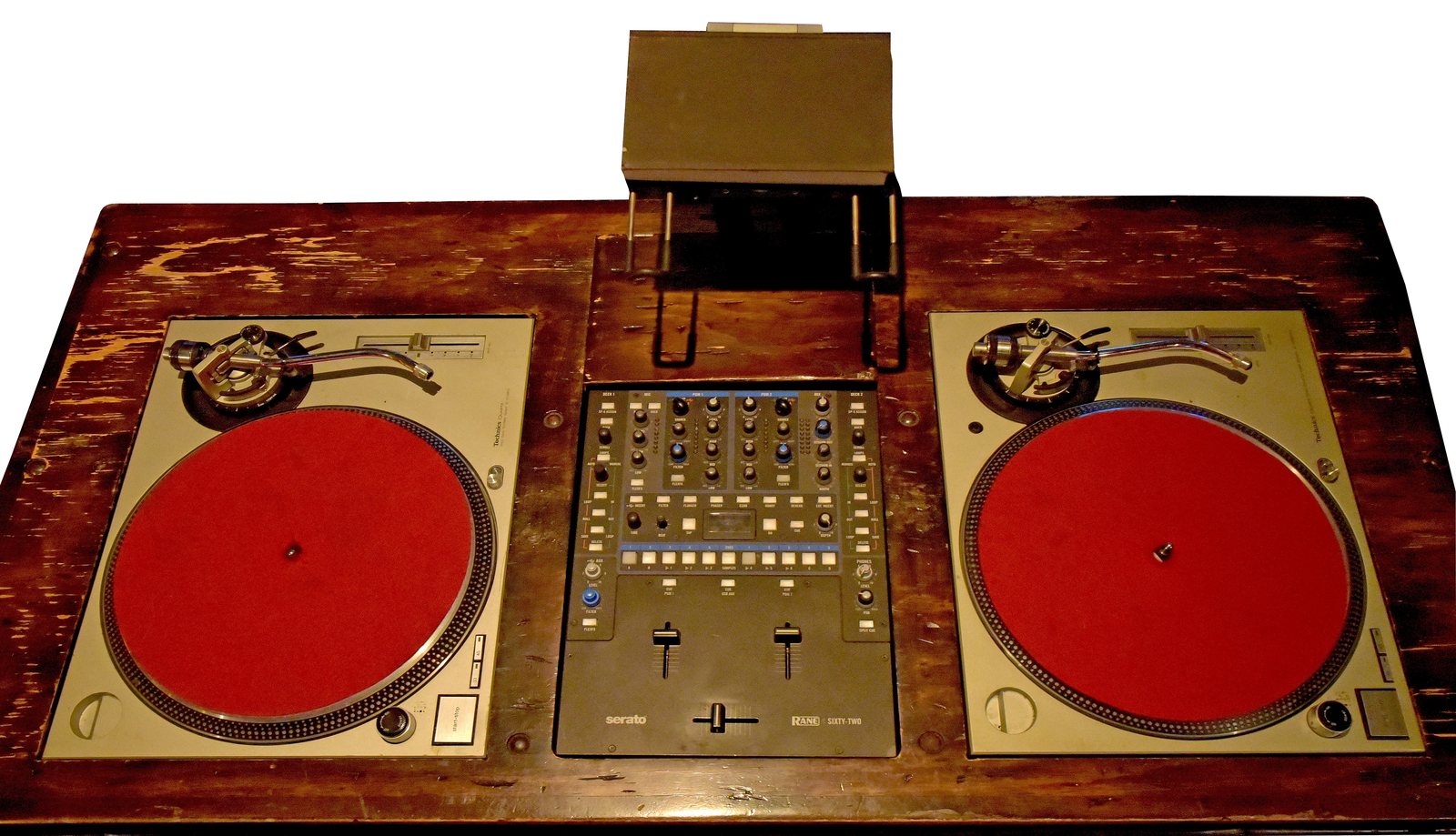
Two Technics SL-1200MK2 turntables and a mixer, the basic vinyl setup in which DJs matched speed with the pitch fader (photo taken in 2019). Source: Photo by Glenn Francis, CC BY-SA 4.0, Wikimedia Commons
From there, machines started sharing the work.
| Year | Gear or feature | What it took over |
|---|---|---|
| 1994 | Pioneer CDJ-500 | Playing and looping CDs instead of records |
| 2001 | Pioneer CDJ-1000 | Handling a CD by hand like a record |
| 2004 | Serato Scratch Live | Playing laptop files from control vinyl |
| 2009 | CDJ-2000 and rekordbox | Pre-analyzed tracks on one USB stick |
| 2012 | CDJ-2000nexus | Automatic beat matching with Beat Sync |
| 2022–2023 | Serato Stems, rekordbox | Splitting vocals and drums in real time |
| 2023–2026 | CDJ-3000, CDJ-3000X | Streaming instead of a record bag |
The turning point came in September 2012. Pioneer gave the CDJ-2000nexus Beat Sync, which locks tempo and beat across linked players, and Quantize, which drops loops and cues onto the grid (Pioneer). Spin wrote that the button was aimed at a new generation of DJs who had never learned to beatmatch by hand (Spin).
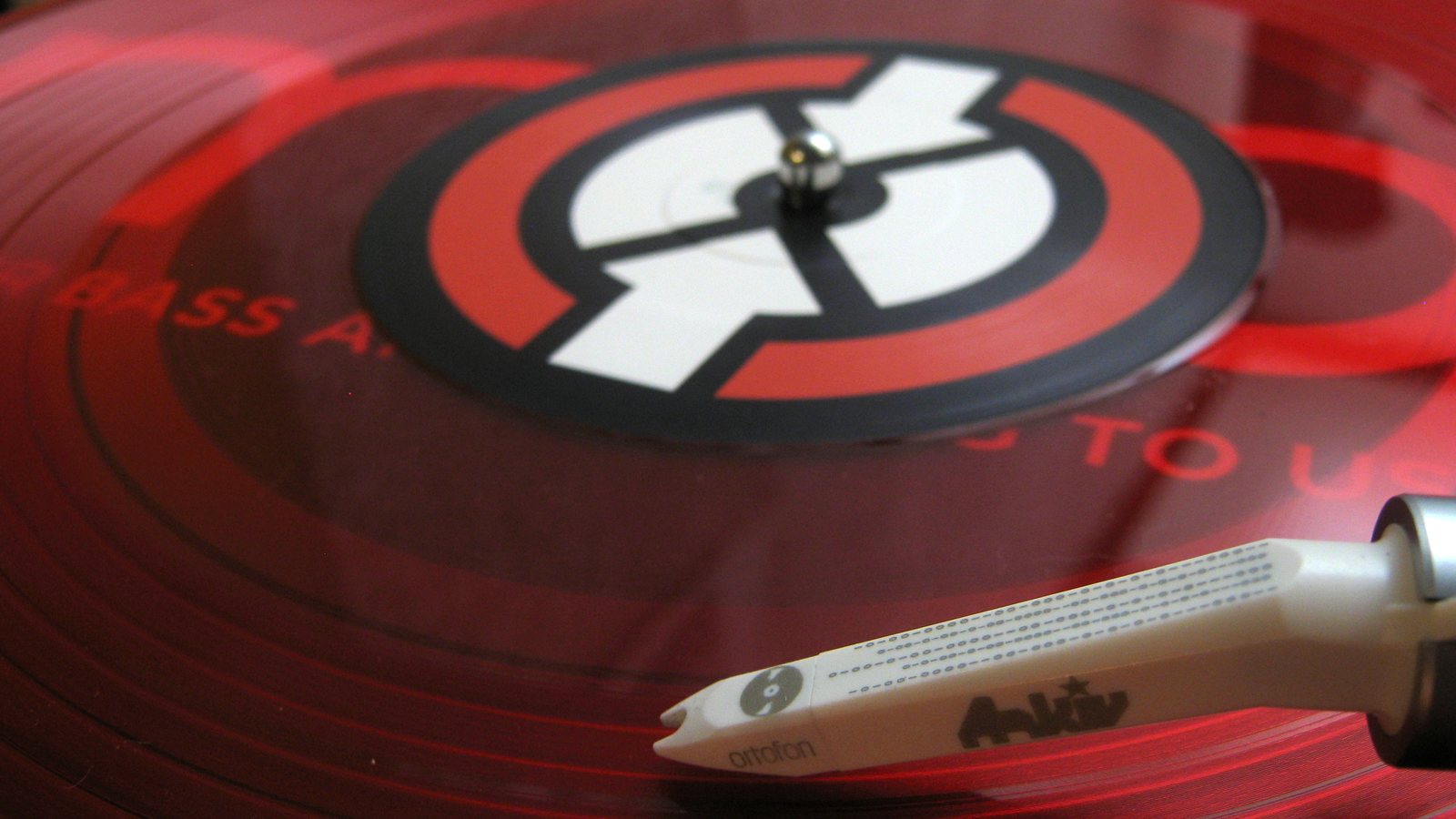
Traktor Scratch control vinyl. Its grooves carry a position signal instead of music, so the file on the laptop moves exactly as the needle reads it (photo taken in 2013). Source: Photo by Audiotecna, CC BY 2.0, Wikimedia Commons
How much easier it got
Picture someone starting out today. The DDJ-FLX4, a beginner controller that launched at $299 in 2022, has a Smart Fader: push one fader and the machine sets the next track's volume, BPM and bass for you (DJ TechTools). Algoriddim's djay app has been blending tracks since 2017 with Automix AI, trained on mixes made by human DJs (DJ TechTools).
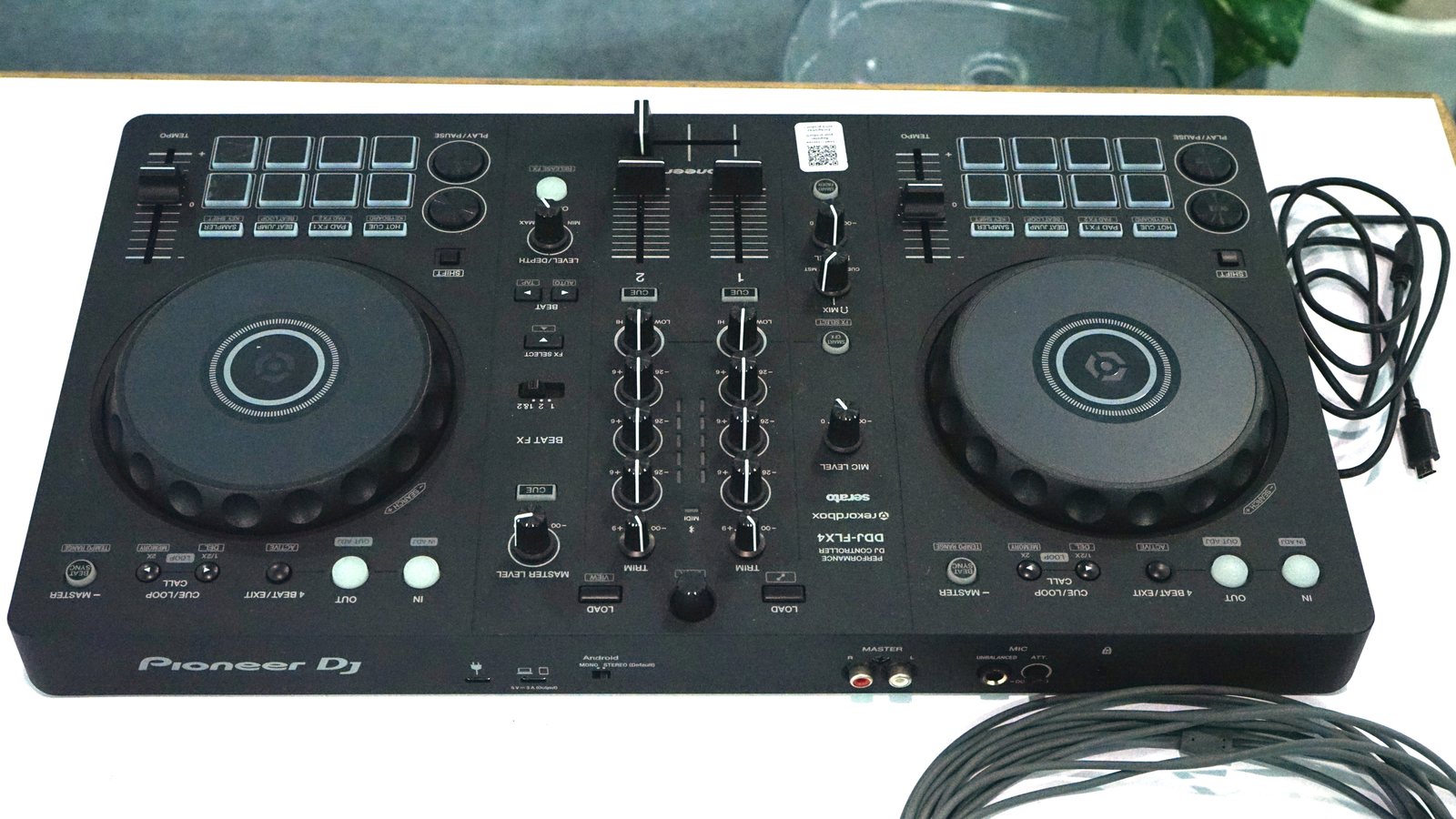
The Pioneer DDJ-FLX4 beginner controller, whose Smart Fader sets volume, BPM and bass as you push one fader (photo taken in Taiwan, 2025). Source: Photo by Solomon203, CC BY-SA 4.0, Wikimedia Commons
Machines now take songs apart, too. djay launched its real-time separation feature Neural Mix in June 2020 (DJ TechTools), and Serato made Stems official in December 2022 (Serato). rekordbox added track separation in 2023 and, in December 2025, a four-way split into vocals, instruments, bass and drums (rekordbox).
The record bag got lighter as well. A June 2023 firmware update gave the CDJ-3000 Beatport streaming with more than 11 million tracks (MusicTech). In 2025 Apple Music (Music Business Worldwide) and Spotify (TechCrunch) both arrived inside DJ software. AlphaTheta's XDJ-AN, released this July, runs directly from DJ apps on a phone (The FADER).
The numbers show it. Google searches for "how to DJ" more than quadrupled between March and April 2020 as COVID-19 spread. That year, while the electronic music industry as a whole shrank by 54%, DJ hardware and software sales grew by 23% (DJ Mag). Korea is no exception. DJ Soulscape wrote that technology and video sharing had lowered the barrier to DJing (GQ Korea), and in March this year Mixmag Asia described university DJ clubs where senior members teach beatmatching and EQ for free (Mixmag Asia).
When anyone can be a DJ
Fairness means starting with the good news. When DJing required two turntables, a mixer, new records every week and a room to practice in, it belonged to people with money and time. Now you can start with a phone. Livestreamed sets have opened the door to people who live far from clubs or who have disabilities (The Conversation). The British DJ Sherelle has said a single Boiler Room video changed her life for the better (Vice).
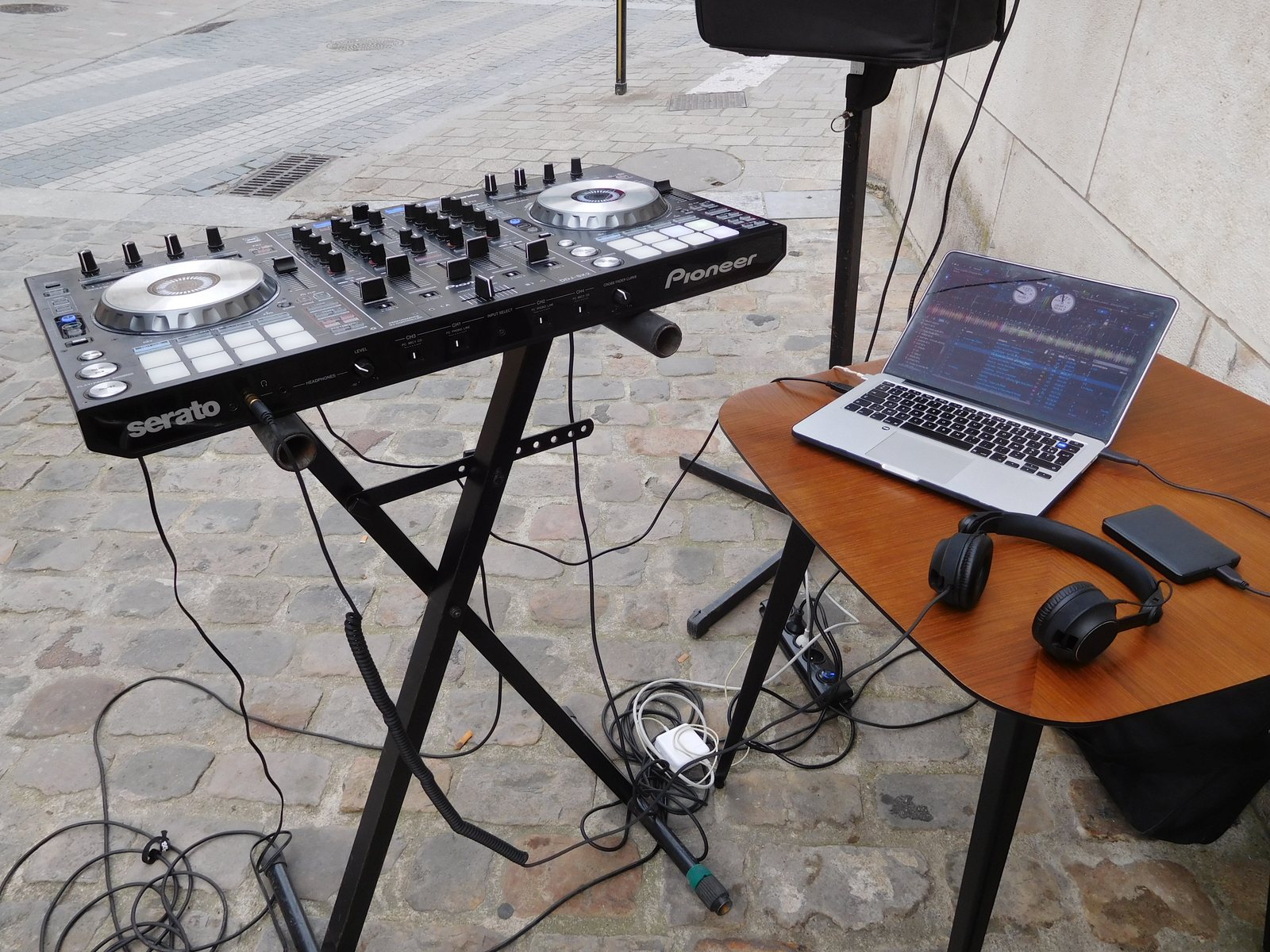
An outdoor DJ spot built from nothing but a controller and a laptop, at the Printemps de Bourges festival in France, 2019. Source: Photo by Cjp24, CC BY-SA 4.0, Wikimedia Commons
Some masters welcomed sync. Detroit techno's Jeff Mills said he was glad when it arrived because it freed his attention for other things, and that what matters is which track you play and when (Das Filter). In 2014 the turntablist A-Trak said his own definition had been too narrow and that DJs on CDJs or Ableton count too (DJ TechTools). Digital DJ Tips has made the same case for years: a DJ's job is to play the right music for the people in front of them, and sync is not cheating (Digital DJ Tips).
DJs hiding behind buttons, stages chasing numbers
The other side is just as serious. In 2016 Carl Cox said that new DJs who had never seen a record were asking where the sync button was (MusicRadar). The same year a Resident Advisor column argued that the CDJ standard had produced mixes that all sound alike, quoting Richie Hawtin's line that convenience had outweighed creativity (Resident Advisor). Seth Troxler tweeted that too many young DJs cannot beatmatch and that with sync on you are an entertainer, not a DJ (EDMTunes). Back in 2012, deadmau5 had written that most "live" EDM shows are playback: "we all hit play" (Rolling Stone).
If gear let DJs skip the basics, social media changed what gets you on stage. When the Pete Tong DJ Academy surveyed 15,000 DJs and producers, 61% said social media numbers matter more than musical skill, and 31% had thought about quitting in the past year (Mixmag). In 2024 Rolling Stone reported that clubs book the DJ with the bigger following (Rolling Stone), and this March it covered producers faking endorsements by laying their own tracks over crowd videos of famous DJs or using AI-made clips (Rolling Stone).
As we see it, the problem is not the button. It is what the button lets you skip. A DJ who has beatmatching in their body hears the drift even with sync on. Auto beatgrids often miss on old disco or live-band recordings where the tempo moves, and a DJ who only knows the button cannot even tell what went wrong. DJ TechTools warned back in 2008 that handing beat placement to the machine stops your ears from developing (DJ TechTools). The weakness of the viral DJ is the length of the practice unit. A 15-second clip keeps only the drop and the transition. The arc that carries a floor for two hours never makes it into the video, so it never gets practiced. To be fair, the claim that fewer DJs can beatmatch rests on testimony from the scene; no one has measured it.
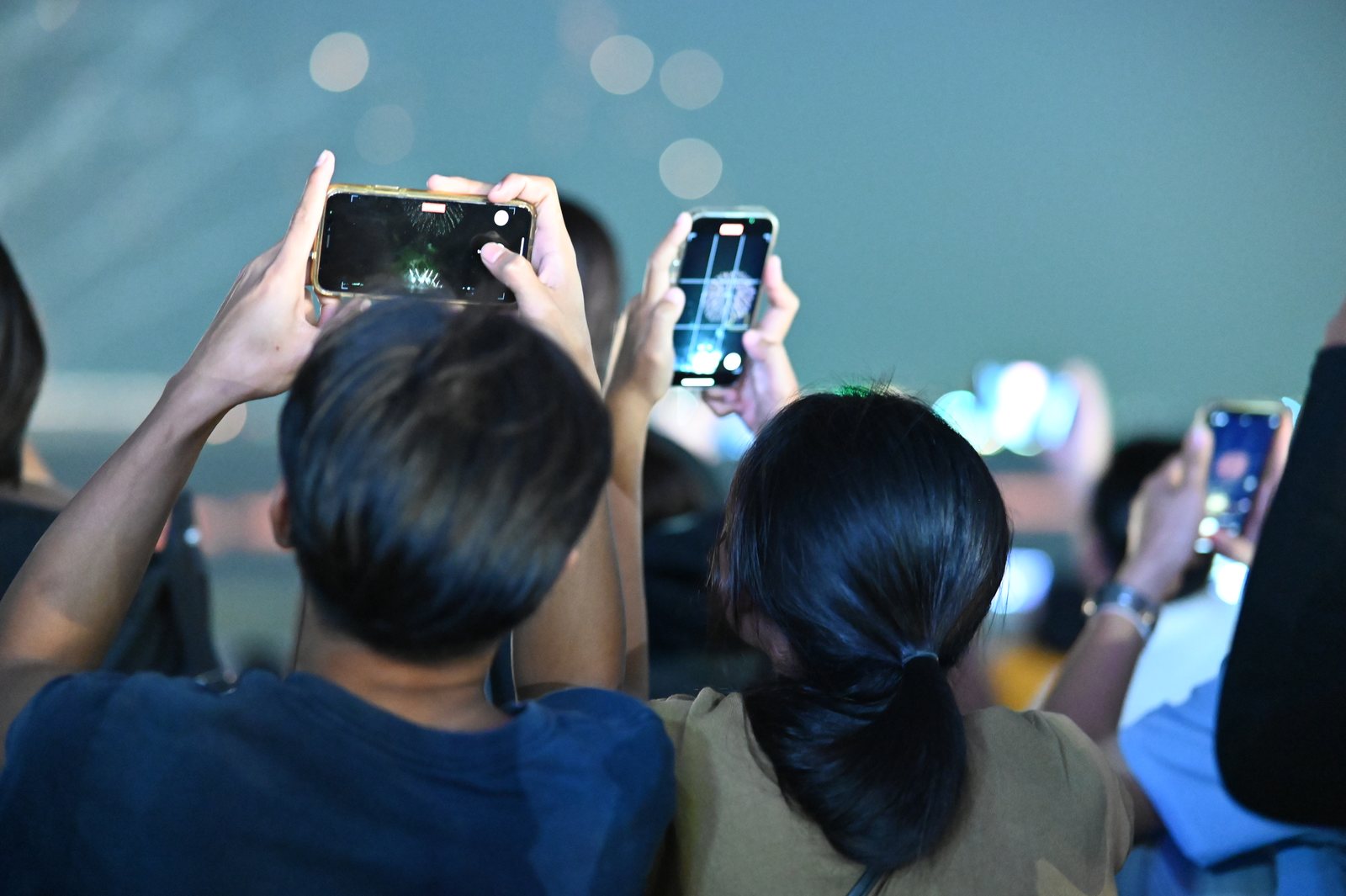
Fans filming a show on their phones (photo taken in 2024). This is how moments on stage turn into short clips. Source: Photo by PattayaPatrol, CC BY-SA 4.0, Wikimedia Commons
The gear will keep getting easier
DJ gear is moving from USB to the cloud and from laptops to phones, and stem separation and AI mixing get sharper every year. The old ways are not disappearing either. Technics stopped making the SL-1200 in 2010, citing falling demand (DJ TechTools), brought it back in 2016 and marked its 50th anniversary in 2022 (Technics).
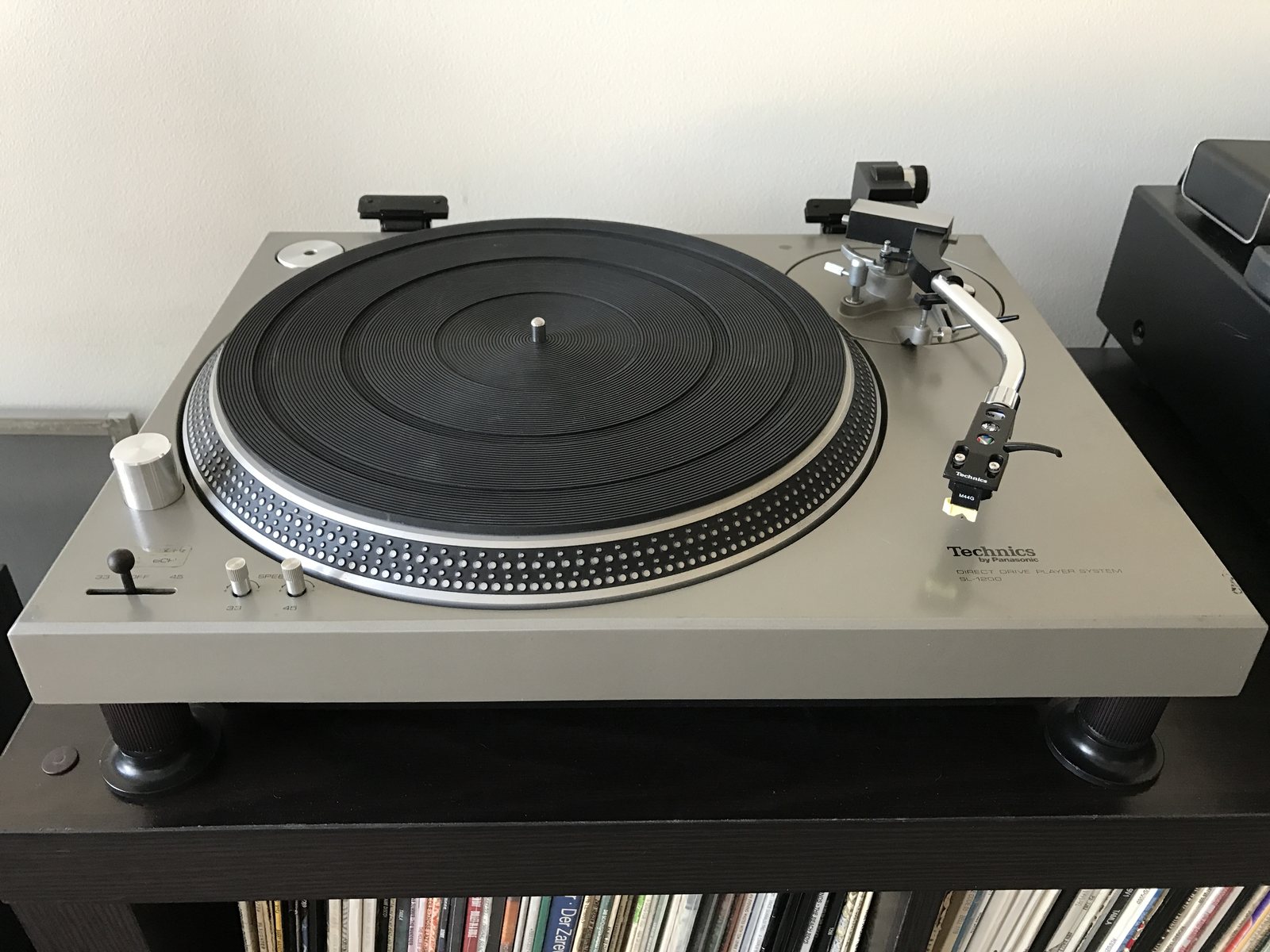
The original Technics SL-1200 of 1972. The pitch fader arrived with the MK2 in 1979 (photo taken in 2017). Source: Photo by BMRR, CC BY-SA 4.0, Wikimedia Commons
In "People Have Been Saying Machines Kill Music for 120 Years", MagTAPE wrote that the DAW was also called cheating when it first reached the studio. New tools are doubted and then taken for granted, and the sync button is on that same road. But where the DAW changed the work of the studio, DJ gear is changing what a DJ is on stage.
So where should we stand?
Turning back the clock is not the answer. Insist that only vinyl is real, and DJing becomes once again a pastime for people with money and time. Saying practice no longer matters because the gear does everything is not the answer either. In March this year Mixcloud summed it up: sync lowers the barrier, but leaning on it before you learn to beatmatch by ear weakens your timing and your listening (Mixcloud). MagTAPE agrees.
The test is simple. The DJ who can use sync is the DJ who can turn it off. Fundamentals show not when the gear works but when it fails. The night will come when the USB won't read, the grid drifts and the club Wi-Fi drops. On that night, what holds the floor is not a button but your ears. The hands and ears the machine saves you should go into choosing music and reading the room.
Promoters need to change their questions too. Only when more venues book DJs by listening to a two-hour set instead of counting followers will more DJs practice for two hours.
In booth after booth, the Pioneer DJ logo is turning into AlphaTheta. The logo is not what needs protecting. When the next piece of gear offers to pick the tracks as well, it should be the DJ, not a button, who decides what remains the DJ's job.
Sources
- Pioneer DJ and AlphaTheta AlphaTheta company profile · Pioneer, sale of the DJ business (2014) · AlphaTheta, name change (2019) · AlphaTheta, Noritsu Koki ownership (2020) · AlphaTheta, brand introduction (2024) · AlphaTheta, euphonia · AlphaTheta, CDJ-3000X · MusicRadar, the rebrand (2024) · DJ TechTools, theories behind the name change (2024) · DJ TechTools, CDJ-3000X (2025) · Digital DJ Tips, CDJ-3000X (2025) · New Zealand Commerce Commission, Serato clearance declined (2024) · UK CMA, AlphaTheta/Serato merger inquiry
- History of DJ gear DJhistory, Francis Grasso · NPR, 50 years of hip-hop (2023) · Technics, SL-1200 heritage · MusicRadar, Technics at 50 · Pioneer DJ blog, DJM-500 · Mixmag, how Pioneer changed DJing (2014) · Pioneer, CDJ-2000nexus press release (2012) · Spin, CDJ-2000nexus (2012) · DJ TechTools, SL-1200 discontinued (2010) · Technics, SL-1200 50th anniversary
- Convenience features and streaming DJ TechTools, DDJ-FLX4 (2022) · DJ TechTools, djay Automix AI (2017) · DJ TechTools, Neural Mix (2020) · Serato, Stems launch (2022) · rekordbox 6.7.0 (2023) · rekordbox 7.2.8 (2025) · MusicTech, Beatport streaming on the CDJ-3000 (2023) · Music Business Worldwide, Apple Music in DJ apps (2025) · TechCrunch, Spotify in DJ software (2025) · The FADER, XDJ-AN (2026) · DJ Mag, the pandemic and music tech (2021)
- The convenience debate Das Filter, Jeff Mills interview · DJ TechTools, A-Trak and real DJing (2014) · Digital DJ Tips, is sync cheating? (2024) · MusicRadar, Carl Cox interview (2016) · Resident Advisor, DJing shouldn't be easy (2016) · EDMTunes, a club's laptop ban and DJs' reactions (2016) · Rolling Stone, deadmau5 (2012) · DJ TechTools, to sync or not to sync (2008) · Mixcloud, should DJs use the sync button? (2026)
- Social media and DJs Mixmag, Pete Tong DJ Academy survey (2025) · Rolling Stone, TikTok DJs (2024) · Rolling Stone, fake co-sign videos (2026) · The Conversation, livestreams and access (2020) · Vice, Sherelle interview (2019)
- Korea GQ Korea, a history of the Korean DJ scene (2021) · Mixmag Asia, university DJ clubs (2026)
- Photos All seven are freely licensed images from Wikimedia Commons, resized but not cropped: CDJ-2000nexus and DJM-900NXS2 (FASTILY, CC BY-SA 4.0) · two Technics SL-1200MK2s (Glenn Francis, CC BY-SA 4.0) · Traktor Scratch control vinyl (Audiotecna, CC BY 2.0) · DDJ-FLX4 (Solomon203, CC BY-SA 4.0) · controller and laptop (Cjp24, CC BY-SA 4.0) · audience with phones (PattayaPatrol, CC BY-SA 4.0) · the 1972 SL-1200 (BMRR, CC BY-SA 4.0). No AlphaTheta-branded product appears because no freely licensed photo exists and the company’s terms of use bar reproduction without written permission.
Comments
Loading comments…