
On September 20, 2025, Ultra Korea ran for a single day at Oil Tank Culture Park in Mapo, Seoul. In 2018 the same festival had filled Seoul Olympic Stadium in Jamsil for three days and, by the organizer's count, drawn 180,000 people. Now it lasted nine hours. There was no edition in 2026. As of November 13, the official site still shows the 2025 date on its front page.
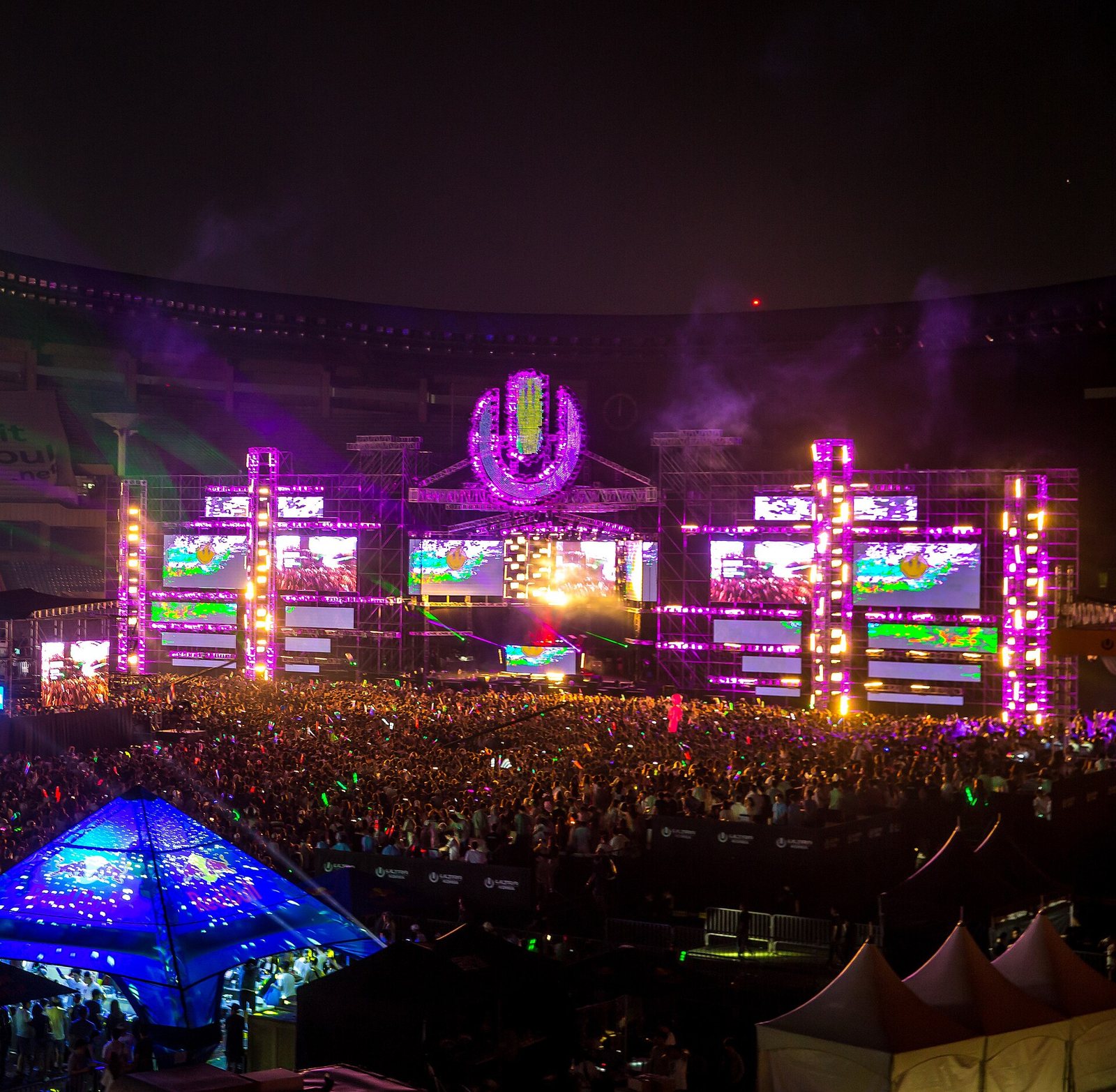
The Ultra Korea main stage at Seoul Olympic Stadium in Jamsil, June 2015. Source: Photo by Ultrafan123, CC BY-SA 4.0, Wikimedia Commons
Many people remember Ultra Korea as something that ended in 2019. The record says otherwise. It came back to Jamsil in 2022, moved to Incheon in 2024 and to Mapo in 2025. But every return meant a new venue and fewer days. So the better question is this: why did Ultra leave Jamsil and start drifting, and can it find a home again?
Asia's first Ultra
Ultra Korea began on August 3 and 4, 2012, at the Olympic Stadium in Jamsil. It was the first time Miami's Ultra Music Festival had come to Asia. Skrillex closed the main stage on the first night, and Tiësto played the second. Carl Cox and John Digweed ran a stage of their own, and the Korean punk band Crying Nut played the live stage. The stages spread beyond the main stadium to the auxiliary stadium and the west parking lot, a layout that lasted through 2022. The organizer reported 54,237 visitors over the two days.
The next year the festival took the name Ultra Korea and admitted only those 19 and older. With Avicii and Armin van Buuren on the bill, about 100,000 came over two days, around 20,000 of them from abroad. In 2016 YG Entertainment invested as a co-producer, and the festival ran for three days for the first time, drawing 150,000 by Ultra's own count. In 2017 it added Resistance, the stage for techno and house. The peak came in 2018, when The Chainsmokers, Zedd and David Guetta played over three days and the organizer counted 180,000.
| Year · venue | Attendance (reported by) | Key acts |
|---|---|---|
| 2012 · Jamsil (2 days) | 54,237 (organizer) | Skrillex, Tiësto, Carl Cox |
| 2013 · Jamsil (2 days) | about 100,000 (organizer) | Avicii, Armin van Buuren, Afrojack |
| 2014 · Jamsil (2 days) | no figure found | Above & Beyond, Steve Aoki, M.I.A. |
| 2015 · Jamsil (2 days) | over 100,000 (press) | Hardwell, Skrillex, David Guetta |
| 2016 · Jamsil (3 days) | 150,000 (Ultra) | Avicii, Martin Garrix, deadmau5 |
| 2017 · Jamsil (2 days) | 120,000 (The Korea Herald) | Tiësto, Hardwell, KSHMR |
| 2018 · Jamsil (3 days) | 180,000 (organizer) | The Chainsmokers, Zedd, David Guetta |
| 2019 · Yongin (3 days) | 130,000 (Hankyoreh 21) | Skrillex, Underworld |
| 2022 · Jamsil (2 days) | 75,000 (organizer) | Martin Garrix, Marshmello |
| 2024 · Incheon (3 days) | about 70,000 (press reports) | Swedish House Mafia, Armin van Buuren |
| 2025 · Mapo (1 day) | about 20,000 (press reports) | Hardwell, Steve Angello, Gryffin |
The numbers are not the whole story. Korean names kept appearing among the international headliners: CL in 2015, DJ Soda and Zion.T in 2016, Raiden and Dynamic Duo in 2017, Yoon Mi-rae and Drunken Tiger in 2018. Every June, a world-class main-stage lineup came to Seoul, and in our view that stage set the bar for electronic music festivals in Korea. In this year's DJ Mag Top 100 Festivals reader poll, Ultra Korea came in at No. 70. Even in a year without a festival, the name lives on. Ultra opened in Asia in Seoul, then spread to Japan, Singapore, Taiwan, China, Bali and Hong Kong.
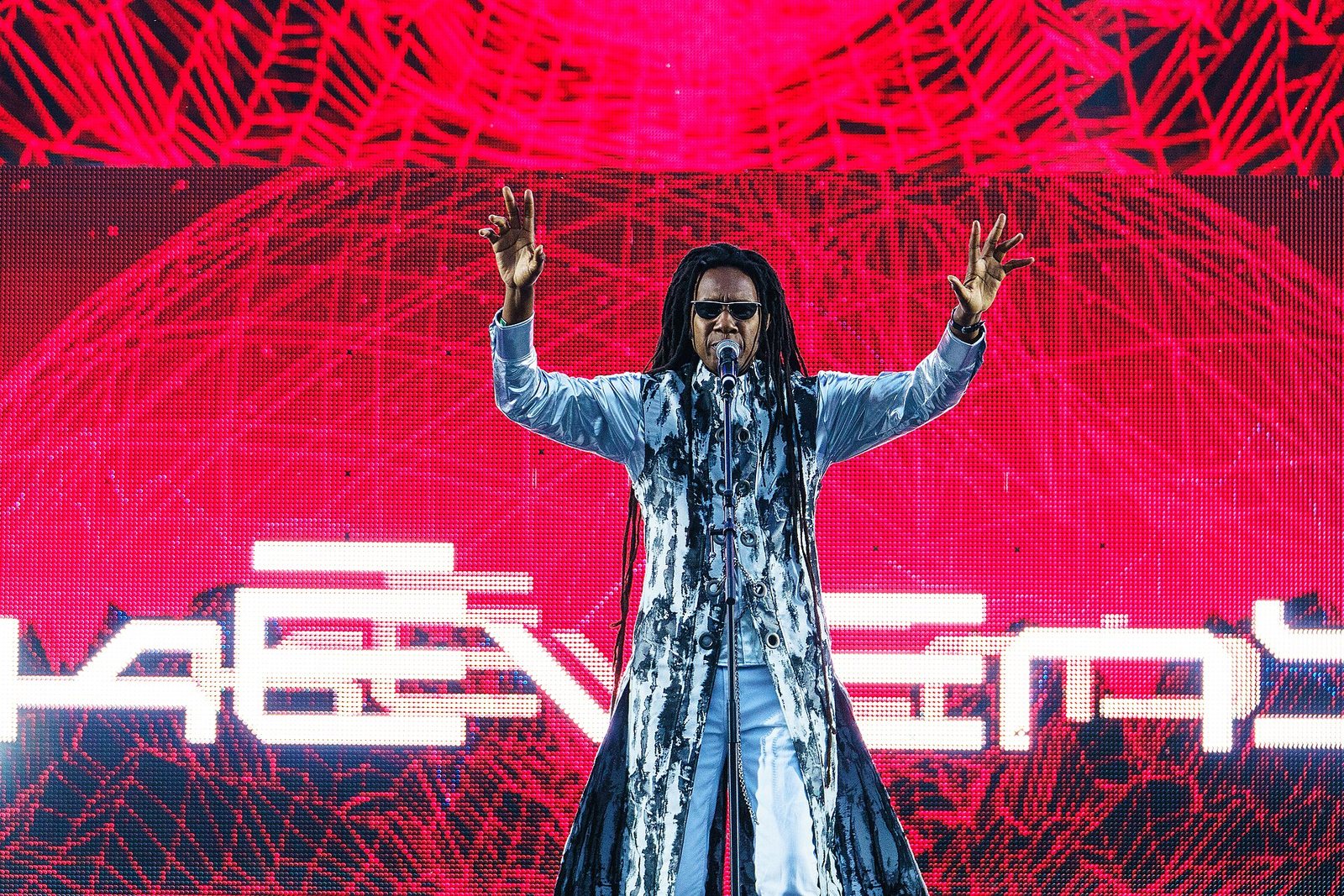
Kēvens on the Ultra Korea live stage at Seoul Olympic Stadium, June 10, 2018. Source: Photo by Kevens, CC BY-SA 4.0, Wikimedia Commons
2019, the year trust broke
Ask about Ultra Korea's mistakes and most of the answers lead to 2019. The organizer sold "private tickets" before naming either a venue or a lineup, attached a no-refund clause, and withdrew it in May after a backlash. For the first time, the festival left Jamsil, for Everland Speedway in Yongin.
On the first day, rain delayed work on the main stage, so entry planned for 1 p.m. began only around 3 p.m. and two opening acts were dropped. Martin Garrix pulled out two days before with an ankle injury, and on the final day headliner Swedish House Mafia cancelled hours before their set. Reports described paid shuttles with poor signage, and paths shared with the theme park that made crossing a single road take 30 minutes. Attendance came to 130,000, down 50,000 from the year before.
The refunds lingered far longer. Promised by the end of June, they slipped to the end of July, then again by months at a time. On October 2 that year, the Korea Consumer Agency opened collective dispute mediation, and about 1,400 people joined (reports give 1,384 and 1,410). The decision told the organizer to refund the ticket price plus compensation for the delay, but the organizer did not accept it, so the mediation failed. In September 2022, the organizer said it had refunded more than 90%. Yet in March 2024, more than 300 people still waiting for refunds were sending certified letters before the statute of limitations ran out.
There were smaller lapses before that. In 2012 there were too few trash bins, and a transit card was the only way to pay (The Korea Times). In 2016, complaints from residents put a cap on the closing time, and illegal parking choked the streets around the stadium (Art Chosun). In 2018, one of the official after-party venues was Burning Sun, a fact that resurfaced when the scandal broke the following year, and the organizer dropped after-parties in 2019. Some things did improve. During the 2015 MERS outbreak, every visitor's temperature was checked at the gate, and in 2017 X-ray screening was added. Still, what fans remember longest is the ticket money they never got back.
A festival on the move
The return to Jamsil planned for June 2020 was postponed because of COVID-19 and never happened, and 2021 was skipped as well. On September 24 and 25, 2022, the festival came back to Jamsil after three years and drew 75,000 over two days. The exit gates that year carried a sign teasing 2023, but there was no 2023 edition. That November, the organizer announced a three-year agreement with Paradise City in Incheon.
The tenth Ultra Korea, held at Paradise City on June 7 to 9, 2024, drew about 70,000 over three days. Swedish House Mafia, who had dropped out of the final day five years earlier, closed the main stage this time. But in 2025, only the second year of that agreement, the festival moved to Oil Tank Culture Park in Mapo, Seoul, and ran for a single day. There were three stages, with Hardwell and Steve Angello at the top of the bill.
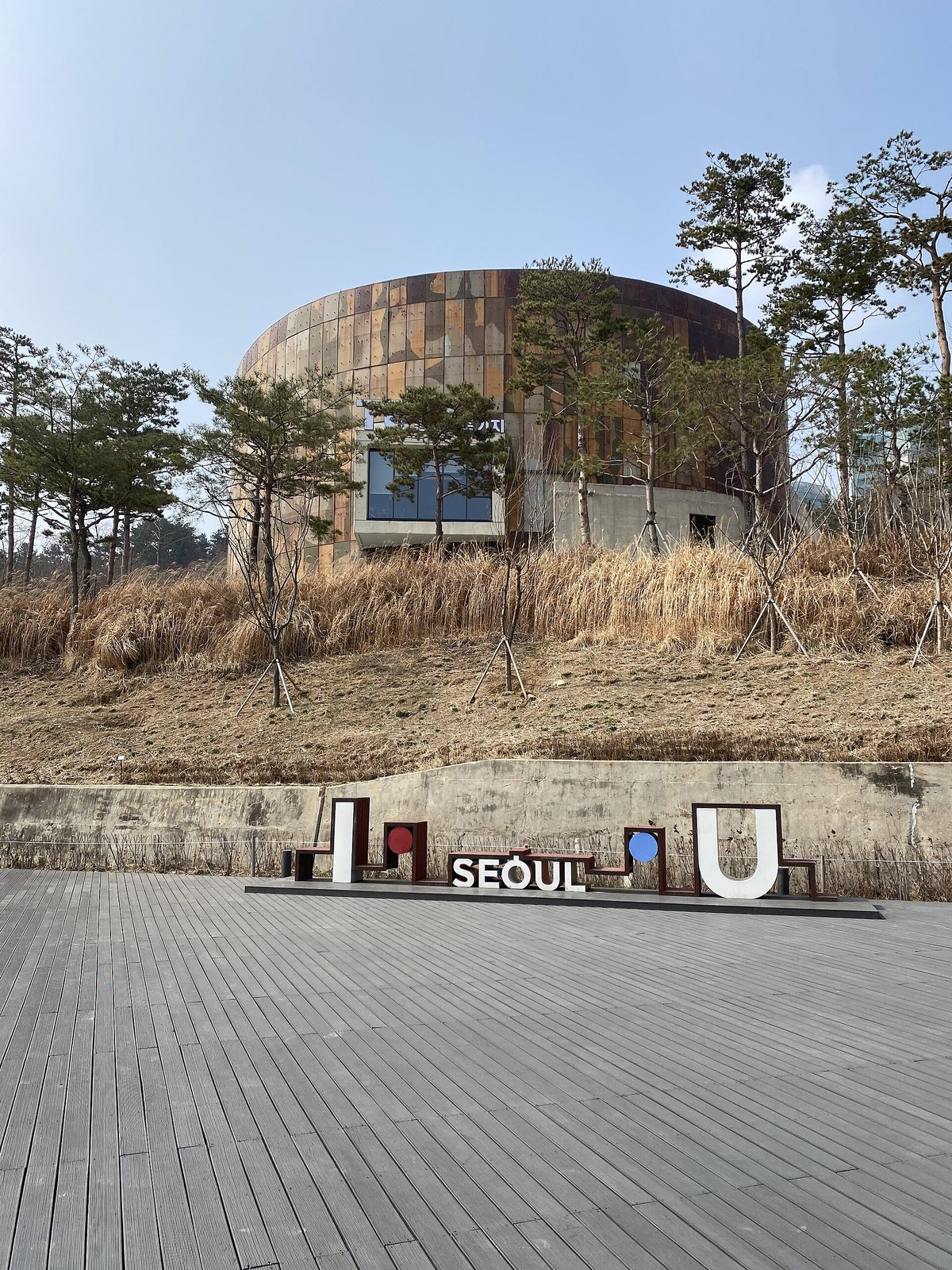
Oil Tank Culture Park in Mapo, Seoul, where Ultra Korea was held in 2025. The park was built from old oil storage tanks (photo taken in 2021). Source: Photo by Mvcervi, CC BY-SA 4.0, Wikimedia Commons
That night, residents of nearby apartments in Seongsan-dong and Sangam-dong complained that the noise shook their windows. They also said nobody had told them in advance. The city of Seoul said it had no plans to make the event regular and would tighten its standards for stage operations. Then, in 2026, there was no Ultra Korea. The official site has yet to announce another date.
Why it isn't what it was
Start with the numbers. Divide attendance by the number of days and the daily average falls from 60,000 in 2018 to about 43,000 in 2019, about 37,000 in 2022 and about 23,000 in 2024. In 2025, about 20,000 came to Mapo, and tickets sold out early. The crowd shrank along with the stage, but the smaller space was full. The problem is not that the audience vanished. It is that Ultra is no longer the biggest talking point of the summer.
First, the sound Ultra stood for went out of fashion. Ultra Korea opened at the height of big room, the stadium-filling main-stage EDM of the early 2010s. NPR has noted that EDM's global value reached about $6.9 billion in 2015, and that from August that year the verdict that EDM was over began to feel like fact. A 2022 Chartmetric analysis found that Martin Garrix had lost 6.2 million monthly Spotify listeners since 2019. By 2023, techno and tech house had moved onto the big U.S. festival stages once reserved for EDM anthems, and a techno DJ played the main stage at Ultra Miami.
Second, the lineups stopped feeling new. Hardwell came in 2015, 2017 and 2025, Armin van Buuren in 2013, 2016 and 2024, and Skrillex in 2012, 2015 and 2019, while Steve Angello has been billed four times since 2014. Martin Garrix played in 2016 and again in 2022. The more often the same names from the genre's peak return every few years, the weaker the case for going this year.
Third, there were more rivals, and they changed. In February 2019, the Segye Ilbo described an EDM festival scene in crisis: six large EDM festivals packed into April to September that year, two of them on the same dates, while the industry worried that the Burning Sun investigation would keep crowds away. The festivals that survived went looking for new audiences. This year EDC Korea booked Hongjoong of the K-pop group ATEEZ as a DJ to reach K-pop fans, and its organizer said it wanted Korea to be EDC's hub in Asia. Over the same years, Ultra moved to a new venue almost every time.
This has happened before. In June 2018, just after Ultra drew 180,000, a music critic looked back in a Seoul Shinmun column at how five large music festivals had crowded the Seoul area in 2013 and 2014, and how most of them closed within two or three years as audiences shifted toward city-center and picnic-style events. In our view, the same tide reached main-stage EDM a few years later, with Ultra Korea at its center. The refund saga described above only made it worse.
Why a return is hard
The first problem is space. Seoul Olympic Stadium, home to eight editions of Ultra Korea, has been under renovation since August 2023, and from 2027 to 2031, while a domed ballpark is built, it will serve as the temporary baseball stadium for the LG Twins and the Doosan Bears. Since 2025, Seoul World Cup Stadium has hosted concerts only if no floor seats are sold, to protect the turf. The city itself has acknowledged that Seoul has no large venue for crowds of more than 20,000.
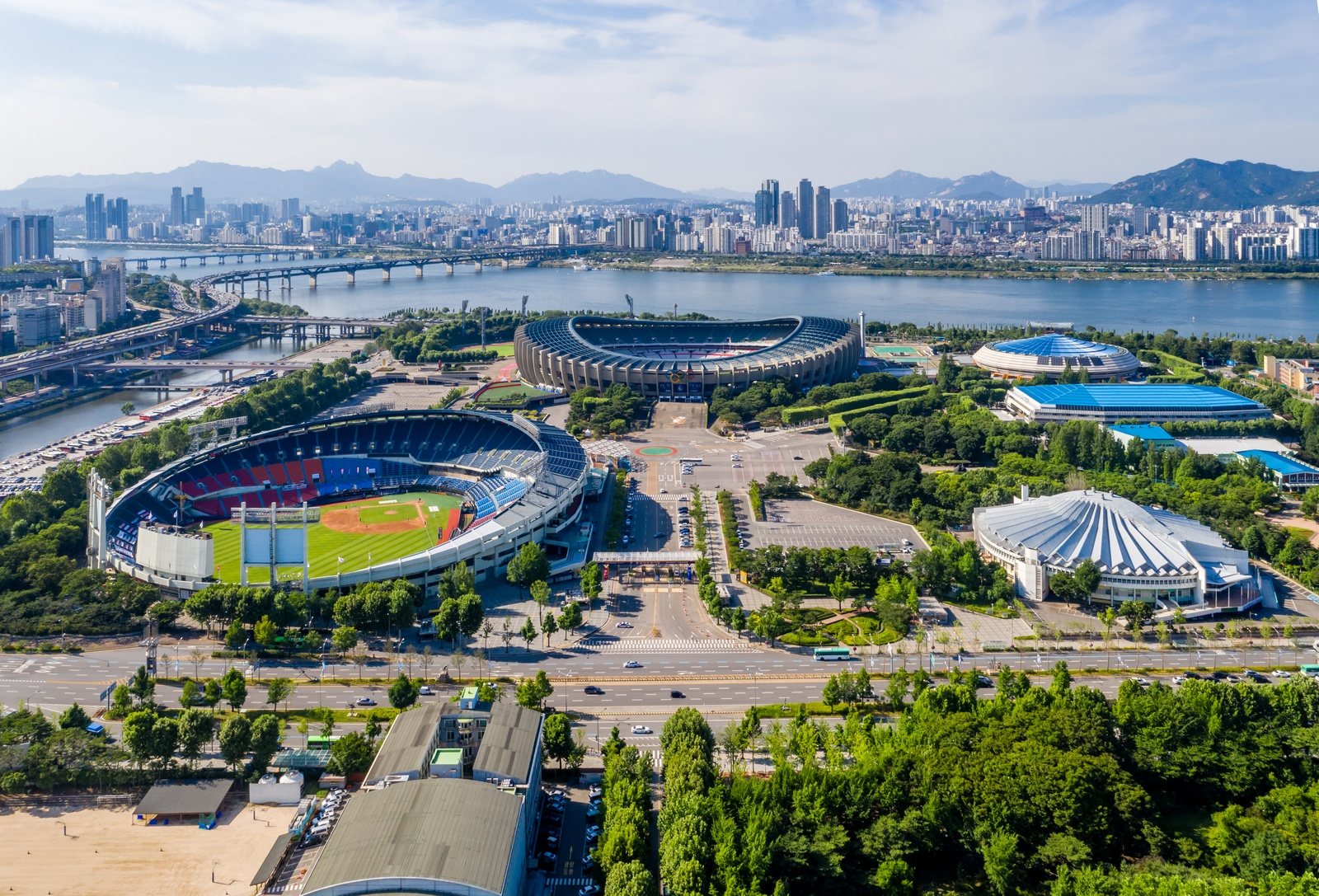
The Jamsil sports complex in 2020. Behind the baseball stadium in front, the large stadium by the river is the Olympic Stadium, where Ultra Korea was held eight times. Source: Photo by Seoul Institute, CC BY 4.0, Wikimedia Commons
The second is rules and money. Safety standards for big events have tightened since the Itaewon crowd crush. A show for more than 1,000 people outside a registered venue must file a disaster response plan, jointly with the site operator, 14 days in advance, and a revision this June added crowd-crush prevention and safety during stage setup and teardown to that plan. The exchange rate hurts too. In 2025, the won averaged 1,422 to the dollar, the weakest on record. For a festival built on international headliners paid in dollars, that is the worst possible number.
The third is trust. Five years on, not every 2019 ticket had been refunded, and the 2023 edition that was teased never came. A festival that changes venues every year will find fewer people willing to buy tickets early.
The audience is still there
Other festivals grew over the same period. EDC Korea, which drew 90,000 to its first edition in 2019, returned in 2025 at Inspire on Yeongjong Island in Incheon, and on October 3 and 4 this year it drew more than 50,000. The organizer says 30,000 of them were visitors from abroad. World DJ Festival drew more than 100,000 to Seoul Land in 2025 and licensed its brand to Japan. The audience willing to buy expensive tickets to an electronic music festival has not gone anywhere.
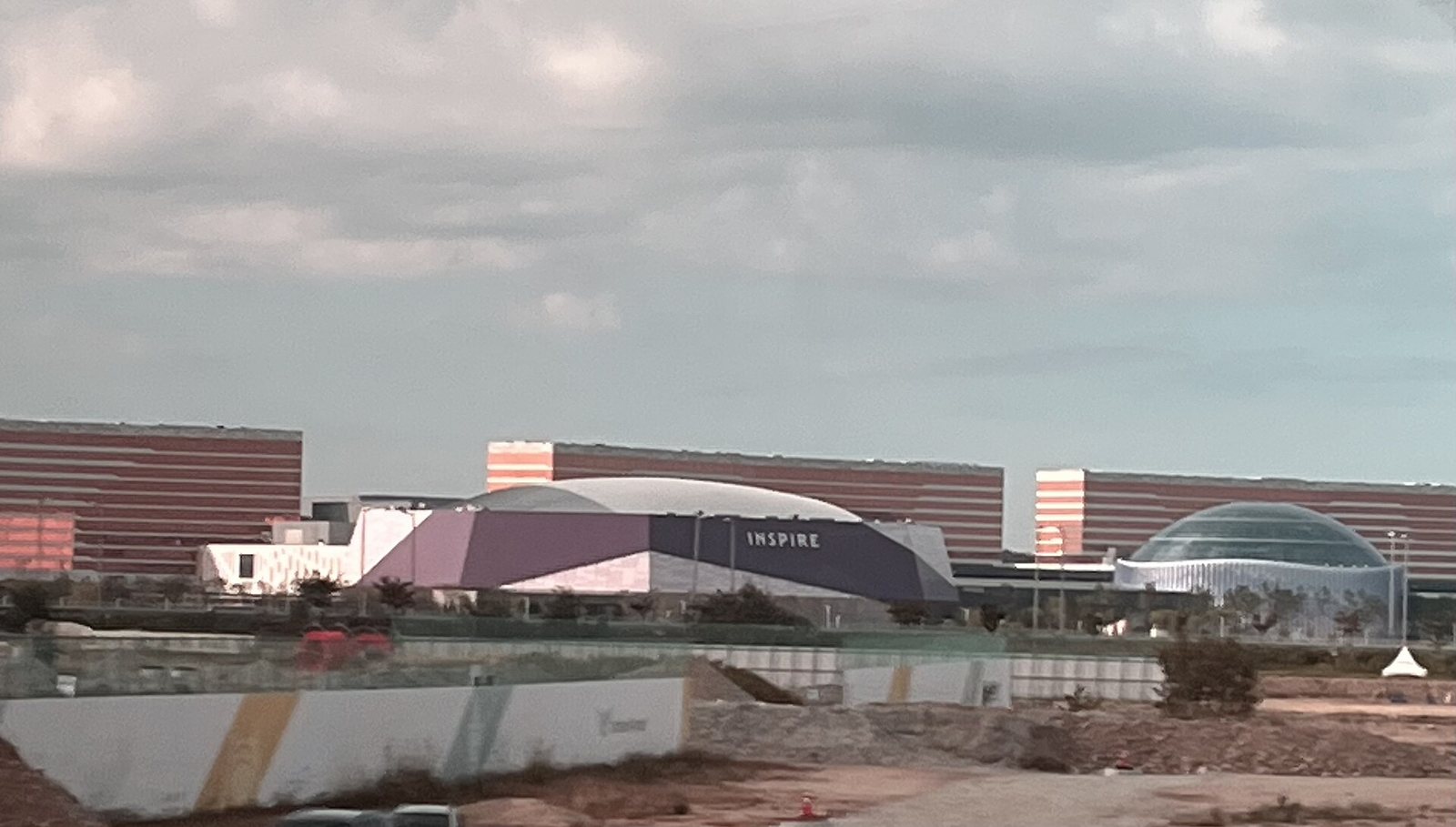
The Inspire resort on Yeongjong Island, Incheon (photo taken in 2025). EDC Korea was held at this resort in 2025 and 2026. Source: Photo by LittleT889, CC BY 4.0, Wikimedia Commons
Ultra's Asian calendar has not stopped either. Ultra's worldwide schedule still lists Japan in September and Taiwan in November this year. Only the Korea entry sits without a date, still labeled with its 2024 venue.
Our take
Ultra at Jamsil has nowhere to go until at least 2031. We found no official sign of a 2027 edition. But there is no basis for saying it will never come back, either. The name and the audience are still there, and EDC has twice tested a site like the resort next to the airport, away from the noise complaints of residential Seoul. If Ultra returns, we think it is more likely to come back to a place like that, for one or two days rather than three, than to Jamsil.
For anyone who remembers Jamsil in June, that is a disappointing conclusion. But what decides the next Ultra Korea may come before the name of any headliner: word that the last tickets have been settled in full, and a promise to return to the same place the following year. Fans buy a ticket for the lineup. They buy again when they trust the festival.
Sources
- The record Newswire, 2012 wrap · Newswire, 2013 wrap · Ultra, 2016 wrap · NewDaily, 2016 co-production · TenAsia, 2018 · Financial News, Jamsil layout (2022) · Inquirer (The Korea Herald), 2015 · The Korea Herald, 2017 · DJ Mag, 2026 ranking · Ultra Korea official site
- 2019 Cosmopolitan, private tickets · Bandwagon, first-day delays · The Korea Herald, headliner cancellation · Hankyoreh 21, attendance · Newspim, dispute mediation · Yonhap, refund claim (2022) · Money Today, unrefunded fans (2024)
- Other operations The Korea Times, 2012 · Art Chosun, 2016 · Yonhap, after-party (2019)
- 2020–2025 Yonhap, 2020 postponement · Yonhap, 2022 · Sports Kyunghyang, 2022 exit gate · Sports Kyunghyang, Paradise City agreement · Sports Donga, 2024 · Hits1 Radio, 2024 main stage · Segye Ilbo, 2025 edition · Herald Muse, 2025 attendance · Segye Ilbo, noise complaints
- Why it faded NPR, EDM's peak and drop (2019) · Chartmetric, EDM genre shifts (2022) · GRAMMY, dance music trends of 2023 · Segye Ilbo, EDM festivals in crisis (2019) · Korea JoongAng Daily, EDC Korea and K-pop (2026) · Seoul Shinmun, Kim Yoon-ha column (2018)
- Venues, rules, costs Money Today, Jamsil as temporary ballpark · Yonhap, large venues in Seoul · Enforcement Decree of the Performance Act, Article 9 (version in force from August 28, 2026; in Korean) · Kyunghyang Shinmun, 2025 exchange rate
- Other festivals Kyeonggi Shinmun, EDC Korea 2026 · JoongAng Ilbo, World DJ Festival 2025 · Ultra's worldwide schedule
- Photos All five are freely licensed images from Wikimedia Commons, resized but not cropped: Ultra Korea main stage (Ultrafan123, CC BY-SA 4.0) · Kēvens on the live stage (Kevens, CC BY-SA 4.0) · Oil Tank Culture Park (Mvcervi, CC BY-SA 4.0) · Jamsil sports complex (Seoul Institute, CC BY 4.0) · Inspire (LittleT889, CC BY 4.0). Photos and posters from the official Ultra Korea site are not used here because its terms do not allow republishing.
Comments
Loading comments…