
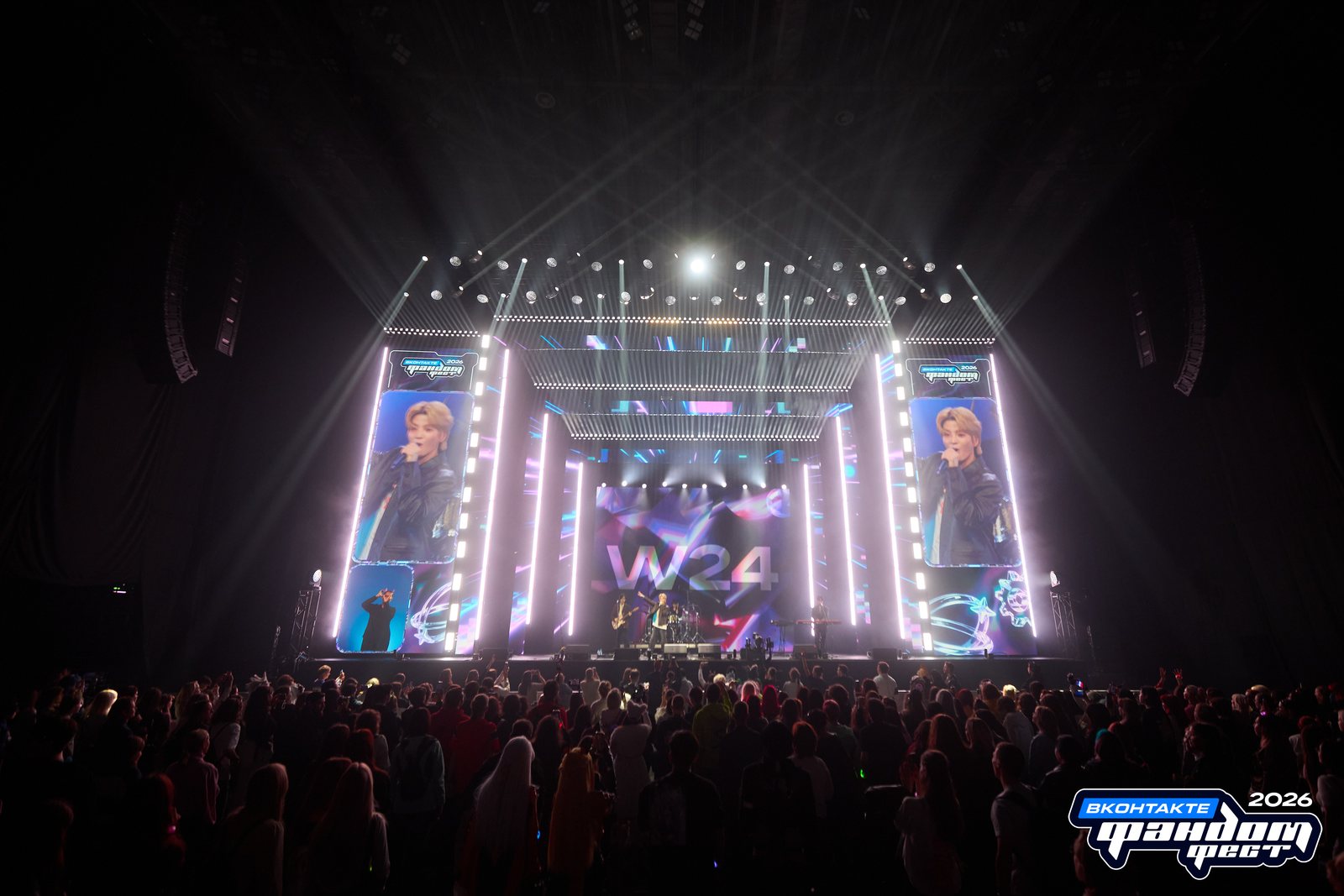
On October 7, 2026, the Russian tech company VK sued the European Union in the EU General Court over its place on the bloc's sanctions list. Three days later, a festival run by VKontakte, the social network in the same group, opened at CSKA Arena in Moscow. The first-day headliner was the Korean rapper BewhY; the second day belonged to the Korean band W24. Organizers reported 17,000 visitors and 9 million views of the broadcast.
Any conversation about K-pop in Russia runs into two statements that collide: there is a market, and the price of going is too high. Both have evidence behind them. Here they are side by side, using public numbers and records.
Closer to a Convention Than a Concert
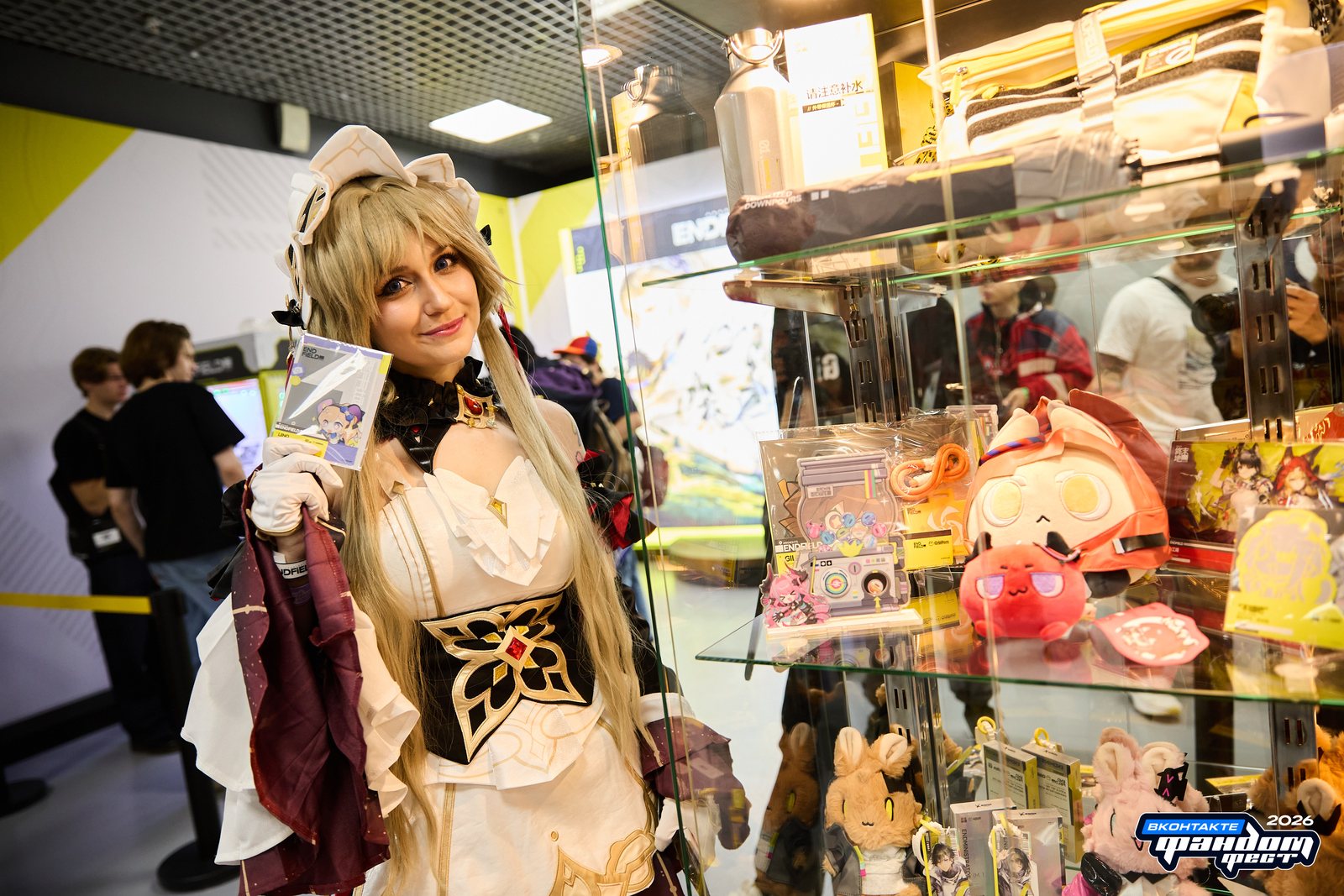
A cosplayer next to a merch case. Source: VK press photo, Oct. 12, 2026 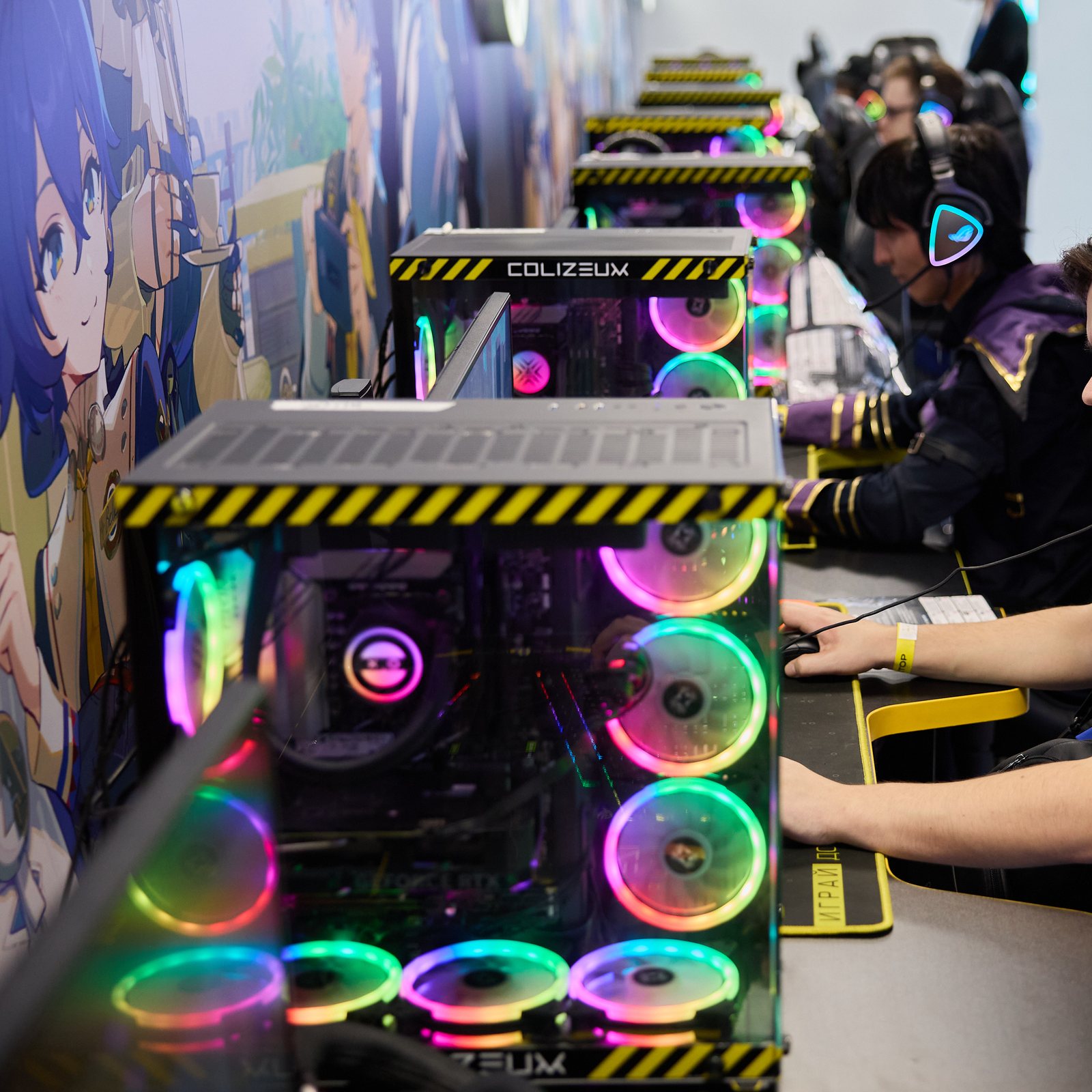
The game zone. Source: VK press photo, Oct. 12, 2026
Fandom Fest (Фандом Фест ВКонтакте) is built around fans, not a genre. A main stage, a lecture hall, cosplay and cover-dance contests, game booths and a merch market share one building. This year the lecture hall also hosted books by Chinese and Korean authors, and the cosplay contest carried a prize of 1.1 million rubles. The four editions so far:
| Dates | Venue and attendance (organizers' figures) | Korean acts (partial) |
|---|---|---|
| 2023, Nov 10-12 | Main Stage, about 10,000 | W24, XEED |
| 2024, Sep 14-15 | Main Stage, 15,000 | BLITZERS, TIOT |
| 2025, Nov 22-23 | Main Stage, 15,000+ | DKB, EVERGLOW |
| 2026, Oct 10-11 | CSKA Arena, 17,000 | BewhY, W24 |
We found no independent count, so these numbers are the organizers' word. The move to an arena brought growth of about 13% over the previous year. That is still a fifth of the 85,000 that VK Fest, the same company's music festival, drew over two days in Moscow this summer.
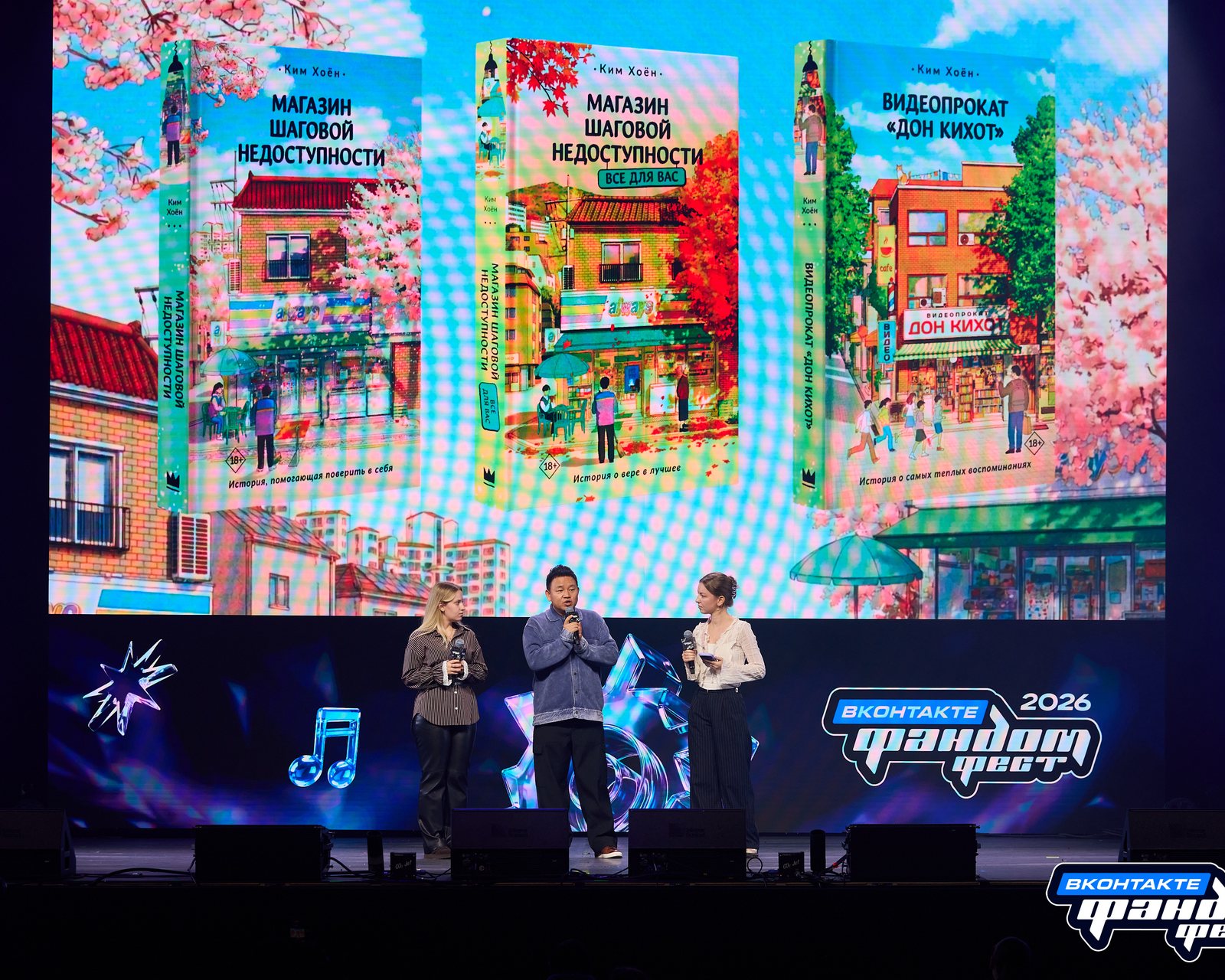
Russian editions of a Korean author's novels on the lecture stage. Source: VK press photo, Oct. 12, 2026 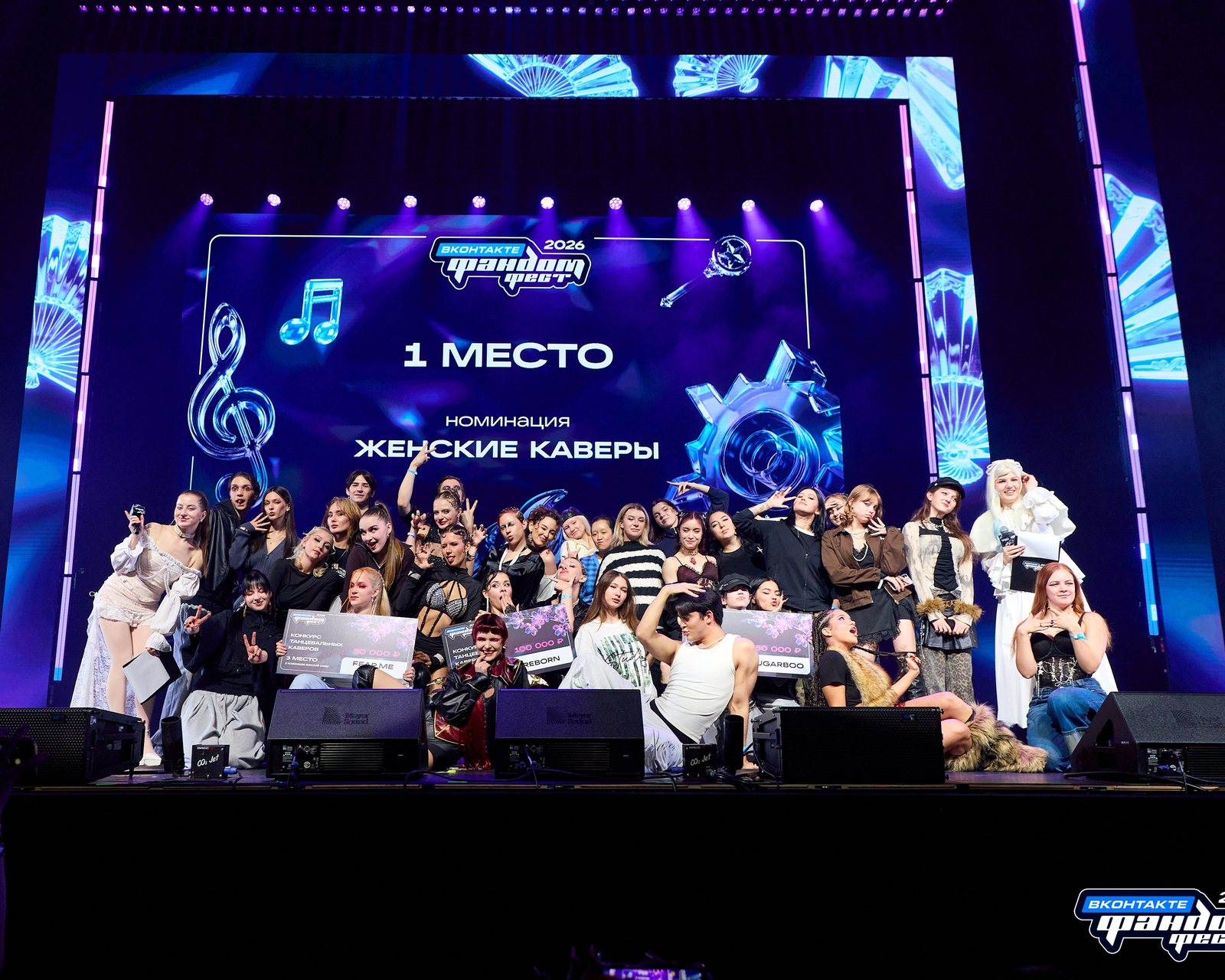
The first-place award in the women's category of the cover-dance contest. Source: VK press photo, Oct. 12, 2026
Where it differs is how people spend. According to a travel site's rundown, this year's tickets came in four tiers from 3,900 to 16,700 rubles, with early entry and autograph access sold separately. Headliner fan meetings required a fan pass on top of the ticket. Ticketland's average concert price in the first half of this year was 2,731 rubles, so even the cheapest seat cost more than 1,000 rubles above average.
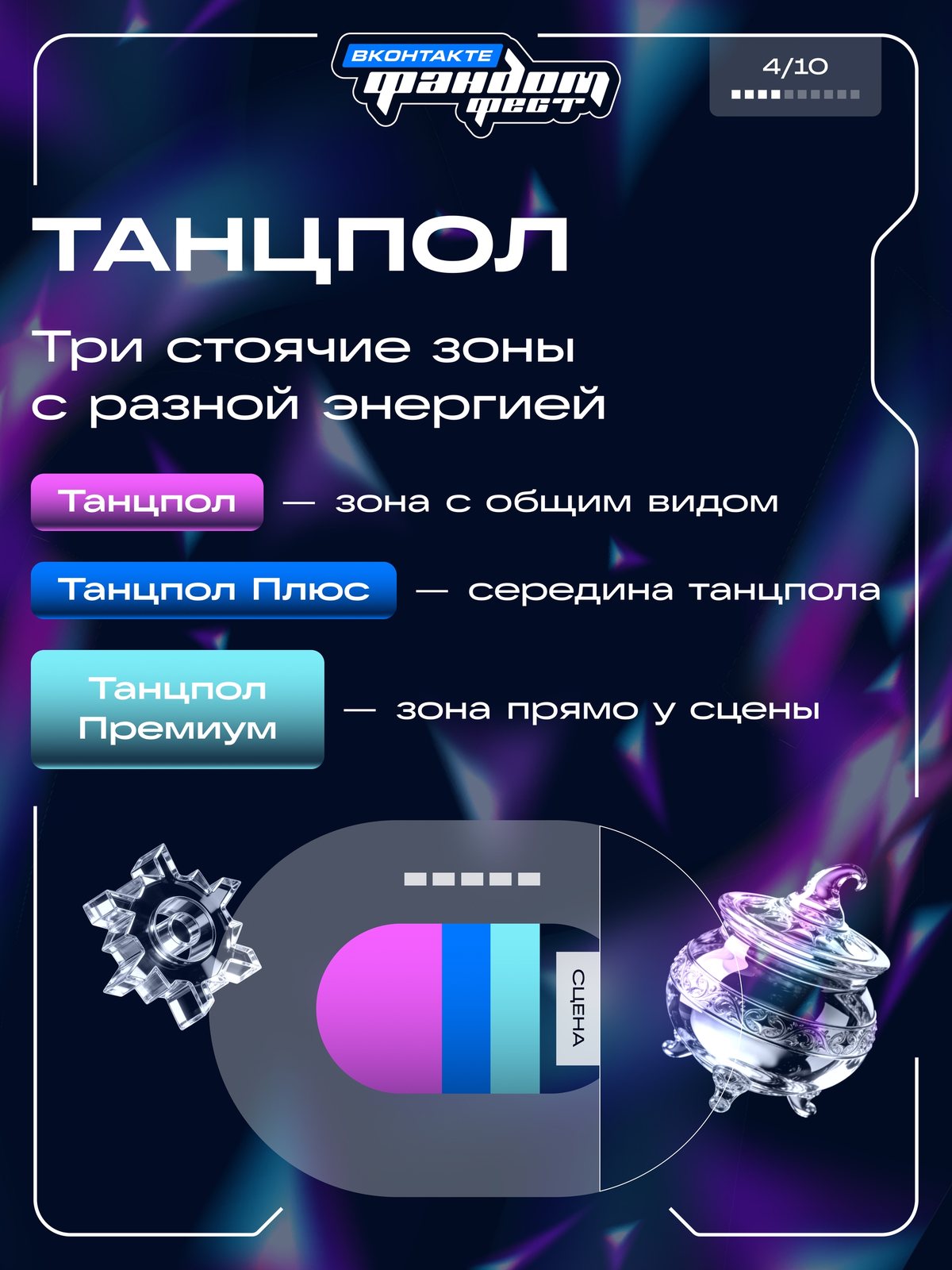
This year's ticket guide. The floor was split into three standing zones. Source: VK press release, May 29, 2026 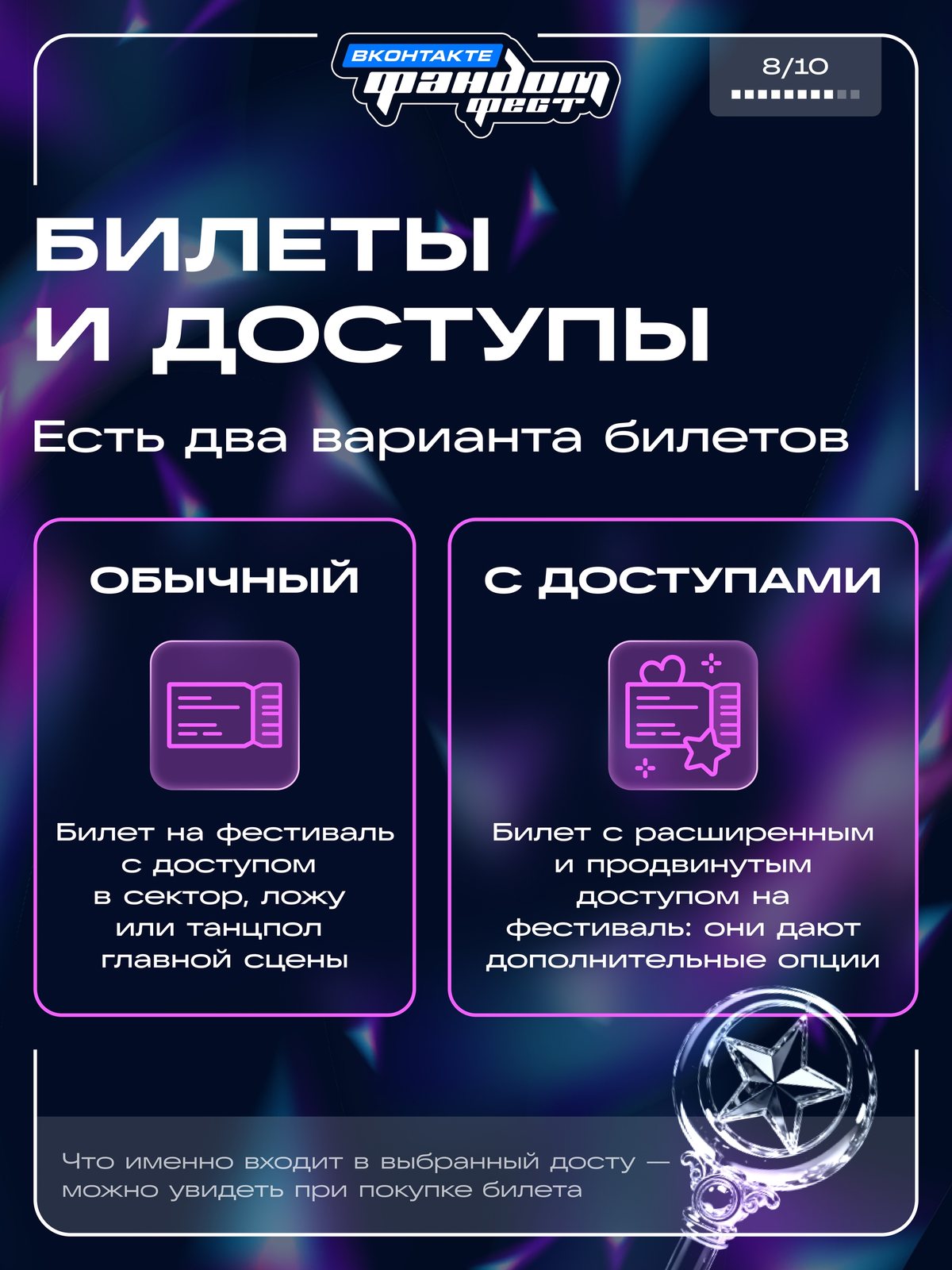
The same zone came as a basic ticket or one with added access. Source: VK press release, May 29, 2026 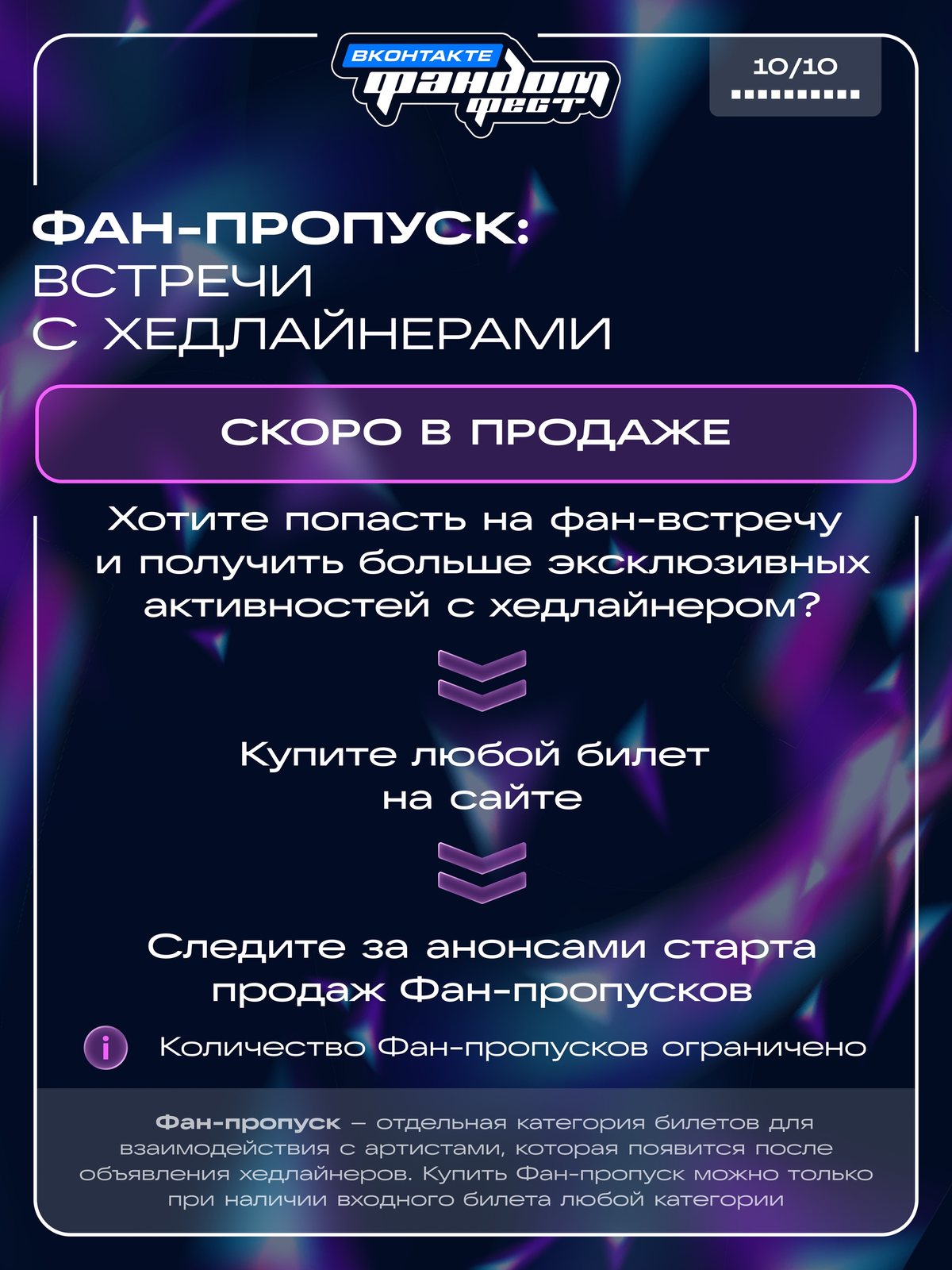
Headliner meet-and-greets took a fan pass on top of admission. Source: VK press release, May 29, 2026
The names on stage kept changing. The two Korean headliners announced on August 25 were not in the final program in October. The second-day slot changed once more after the September 24 announcement. Public sources give no reason for the swaps.
The Public Name of "VK Summer Music"
In the industry, the summer K-hip-hop show tends to circulate in English as "VK Summer Music." We could not find that name on Russian ticket pages. What you find there is 82 Edition.
82Edition, held at the club Atmosphere on July 6, 2025, billed itself as Moscow's first festival devoted entirely to Korean hip-hop. Sik-K, HAON, VANGDALE and BewhY played, and the page does not mention VK. The following year, 82 Edition: Summer Heat repeated the format, added nowimyoung, Jmin, Be'o and Loopy, and carried the label of the "VK Музыка Летом" (VK Music in Summer) project. Moscow also has a venue called VK Музыка Summer Stage, which is easy to confuse with it. It shares an address with Main Stage, where Fandom Fest ran through 2025.

Promotional image for 82 Edition: Summer Heat. Source: Yandex Afisha event page 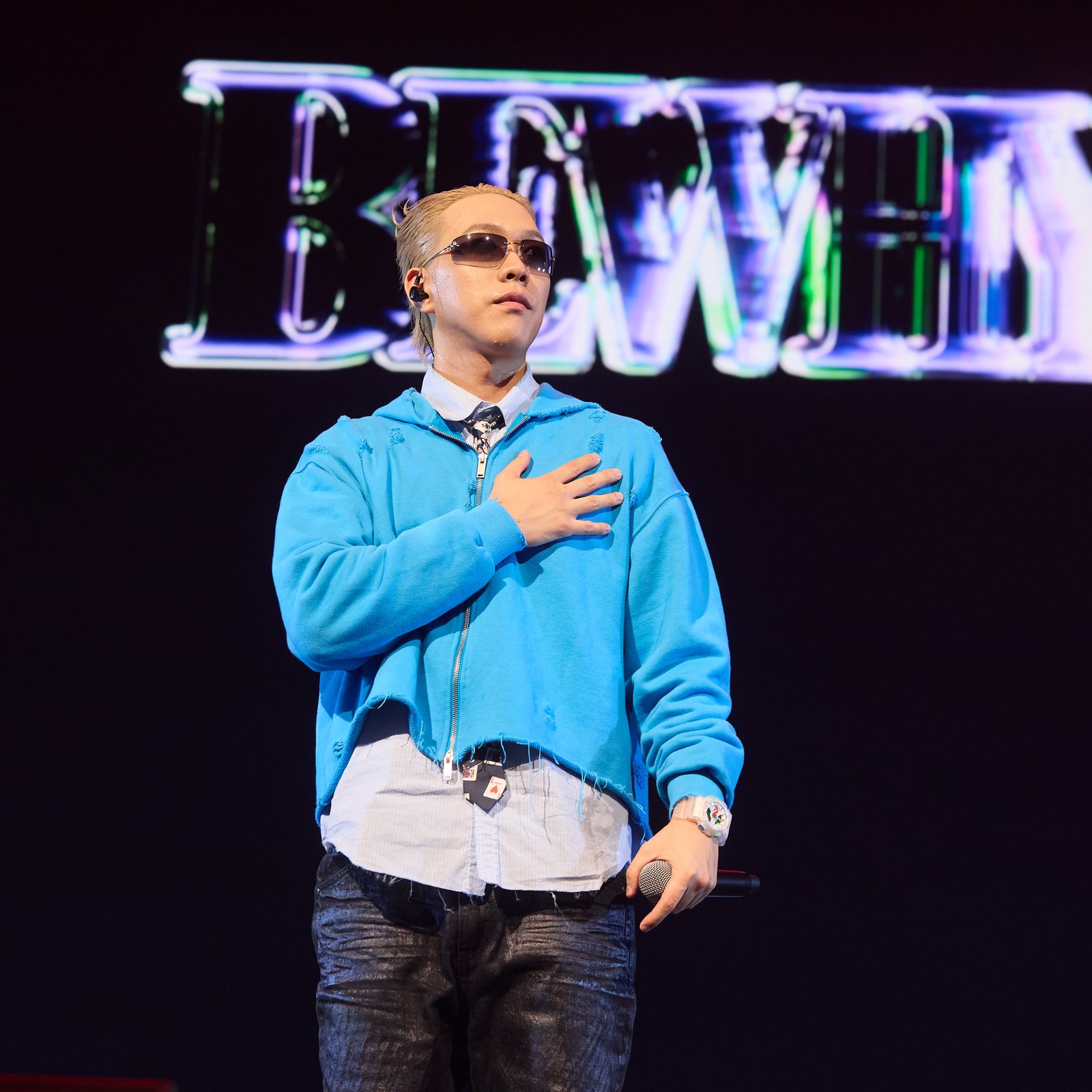
BewhY, the first-day headliner at Fandom Fest, on October 10, 2026. He also played 82Edition a year earlier. Source: VK press photo, Oct. 12, 2026
The series shows that demand for Korean music in Russia reaches beyond idols. In a 2025 Izvestia feature, local promoters said foreign rappers are easier to book because they are less political.
The Acts That Sang in the Local Language Stayed
W24's Russian story begins at the first Fandom Fest in 2023, where the band covered "Blood Type" by the Soviet rock group Kino and "A Million Scarlet Roses," a song Koreans know well too. The following spring it released a mini album of Russian-language covers through a VK project. In January this year it played six cities from St. Petersburg to Krasnoyarsk, and in October it headlined.
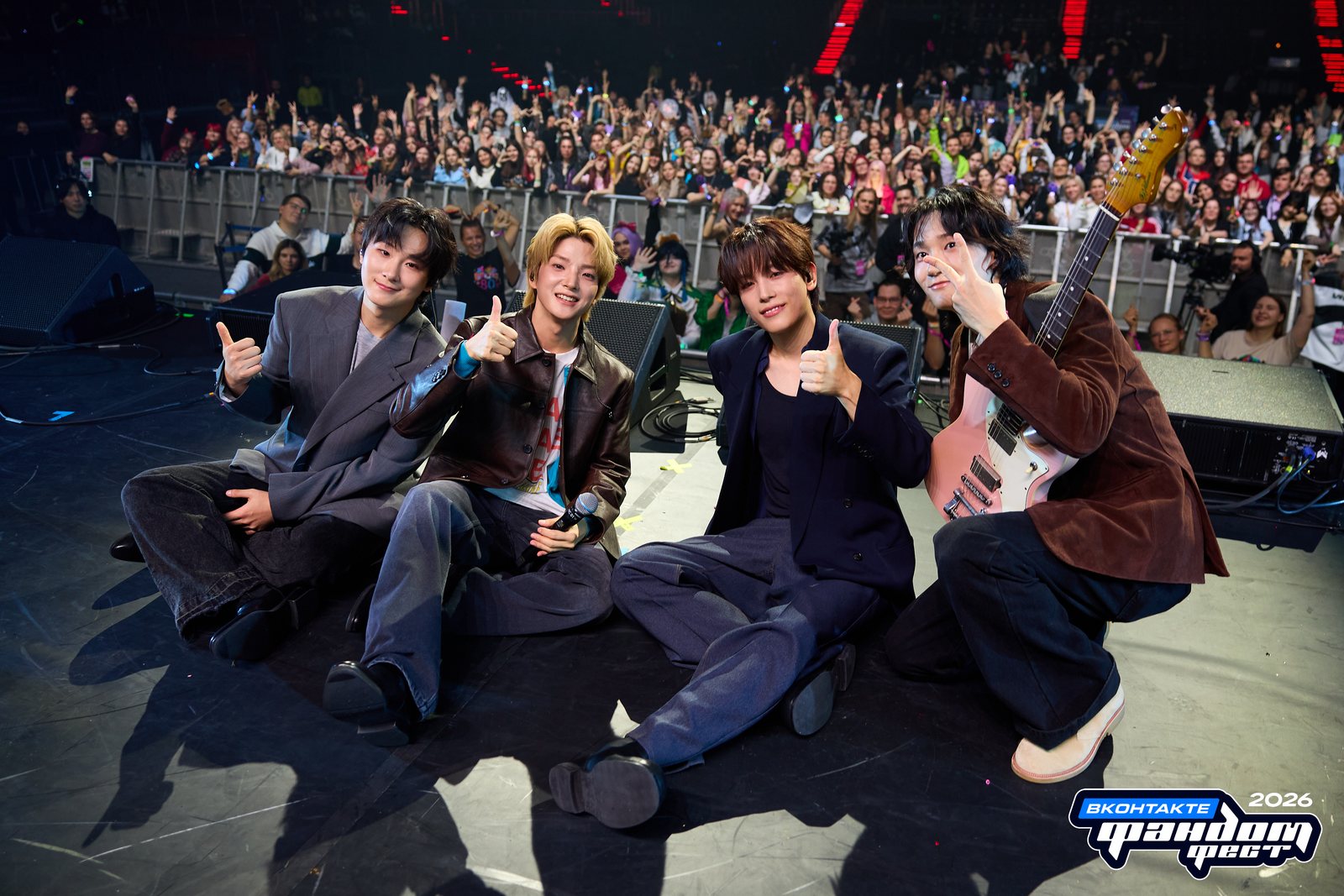
W24 played the first Fandom Fest in 2023 and returned as headliners three years later (October 11, 2026). Source: VK press photo, Oct. 12, 2026
Similar scenes keep appearing. TIOT sang Niletto's "Lyubimka" in Russian at Fandom Fest 2024. In Kazakhstan, the girl group Kandis made its name in a singing competition by performing "Kesh Meni" in Kazakh, and this year landed a slot at Comic Con Astana. In this region, a local-language cover is the admission ticket you see most often.
Not Wide, but Deep
On the surface, Russia's live market is large. By Now Agency's count, ticket revenue for cultural events reached 306 billion rubles in 2025, up 28%. Volume rose just 2% to 439 million tickets, 13% below 2019. This market grew on price. In the first half of this year, Ticketland's concert sales fell 4% and festivals 9%. Several promoters report declines of 15 to 30% on some shows, while others say little has changed. Meanwhile lighting and sound gear rose 40 to 70%, and the ad cost of bringing in one attendee went from 150-300 rubles to 500-900.
Recent figures for K-pop alone are scarce. In the first quarter of 2023, 15% of Yandex Music users played at least one K-pop track, and plays tripled year on year. In 2022, VKontakte counted a little over 1,500 K-pop communities with more than 9.1 million subscribers combined. We found nothing newer from the services, which leaves no basis for stating the market's current size.
The audience comes into sharper focus. When the telecom MTS analyzed more than 13,000 attendees at 10 major K-pop shows over the year from January 2024, about 30% were minors and more than 60% earned above the Moscow average. In the same article, the head of MTS Label said K-pop is not yet a mass phenomenon in Russia. X:IN sold more than 6,000 tickets across two shows in Moscow and St. Petersburg in the same period.
A Korean government survey points the same way. In the 2026 Overseas Hallyu Survey (2025 data, 30 countries and regions), favorability among Russian respondents who had encountered Korean content was 44.5%, the lowest of all. The average was 69.7%. It fell from 47.4% a year earlier, and willingness to recommend dropped 5.2 points to 48.6%. The base is not wide, yet tickets starting at 3,900 rubles bring 17,000 people to an arena. Small and deep is the better reading. The Russian lineups we checked show no acts from the so-called big four agencies. Before those acts move, someone has to weigh the costs below.
The Price
First, sanctions. On July 13, 2026, the EU listed VK under Decision 2026/1709. Its reasoning: the Max messenger was developed under the supervision of the Federal Security Service, and VK gives technical support to the repression of civil society. VK has sued, calling the sanctions unlawful and baseless. Its apps left the App Store in June and Google Play in July. A listing means assets in the EU are frozen and providing funds is prohibited. Whether the listed company and the entity signing a festival contract are the same has to be checked case by case. Any company with EU bank accounts or tour dates should call a lawyer before answering a proposal.
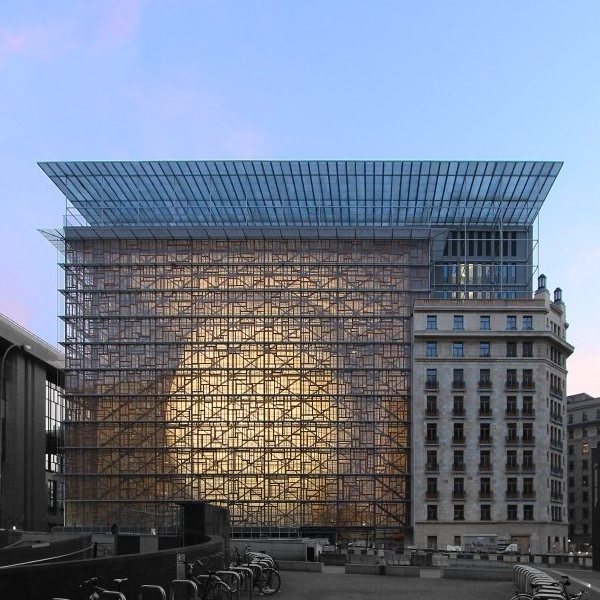
The Europa building in Brussels, home of the Council of the EU (2016). Source: Photo by Samynandpartners, CC BY-SA 4.0, Wikimedia Commons
Second, reputation. Ahead of a Moscow show in November 2025, fans of one girl group spent months asking for it to be canceled, and afterward a Ukrainian fanbase active since 2021 shut down. Speaking and singing in Russian on stage made things worse. The admission ticket described above read as the opposite outside the country. The K-pop outlet KpopPost reported that agencies promote these shows mainly through local channels and stay quiet on international ones.
Third, variables inside Russia. On October 10 and 11, the same dates as Fandom Fest, Kanye West (Ye) was scheduled for two shows at Gazprom Arena in St. Petersburg. The cheapest tickets sold in an hour. A week later the stadium said it had no rental agreement, and the promoter conceded the shows could not go ahead on those dates. The local outlet Fontanka reported a call from higher-ups in Moscow. He had just drawn about 70,000 people in Tbilisi. In late October, the Omsk rock band Felice Rivarez called off its 10 remaining shows. According to the band, security forces stormed venues in Perm and Tyumen, made audiences lie on the floor and checked their phones. That does not mean foreign acts were targets, but it shows what things look like behind the stage.
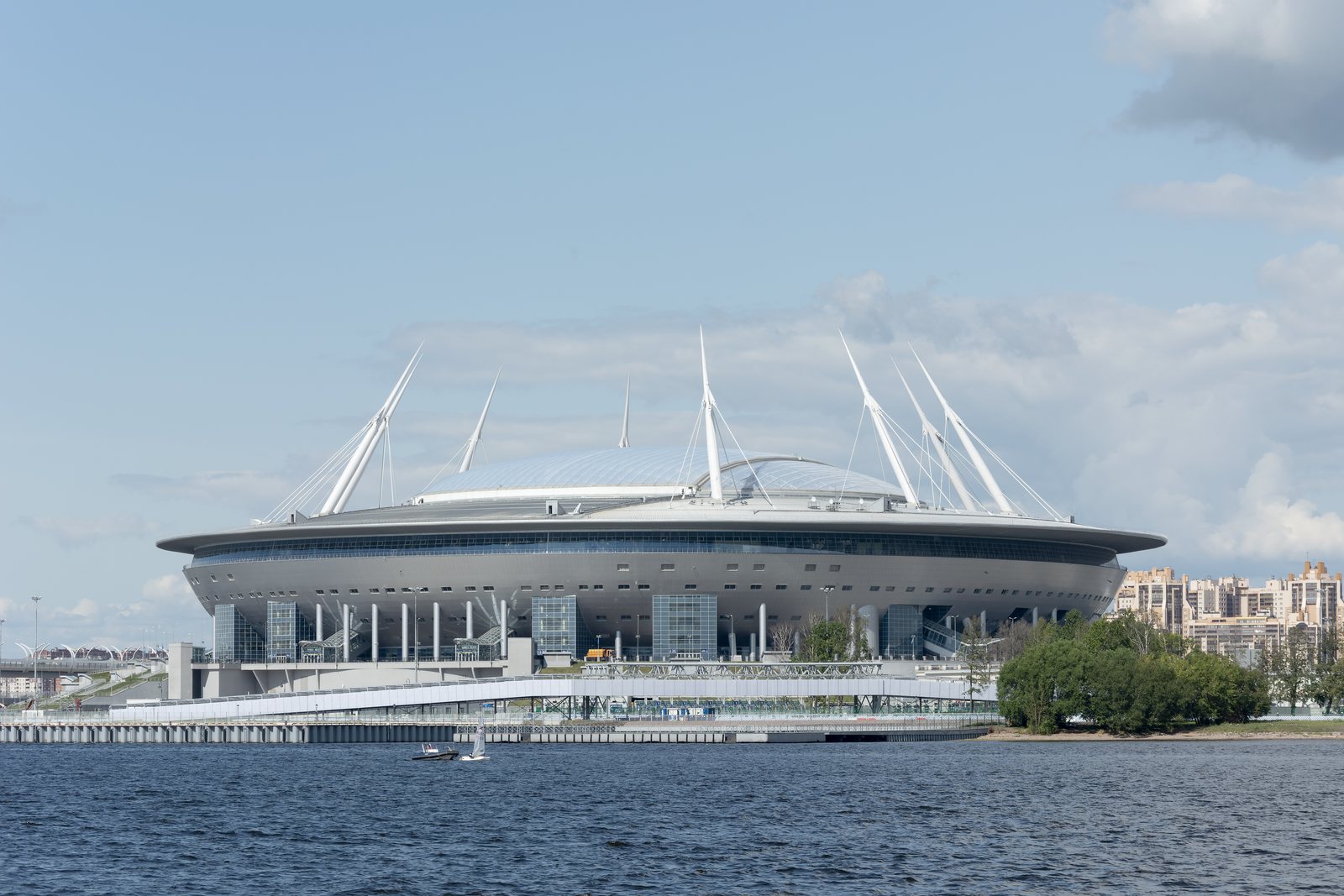
Gazprom Arena in Saint Petersburg, where Ye's two shows were scheduled and then fell through (2018). Source: Photo by Andrey Korzun, CC BY-SA 4.0, Wikimedia Commons
Fourth, travel and safety. South Korea's foreign ministry keeps a special travel advisory on all of Russia outside its Level 3 and 4 zones, Moscow included. On October 31 it issued a notice on terror threats in Moscow, and on October 29 a warning against posting photos of drone strikes and strategic sites on social media. No touring crew can shrug those off. Direct flights have been suspended since 2022, and Russia's deputy foreign minister said on October 20 that talks are under way but it is too early to discuss results. South Korea joined Russia's list of "unfriendly" states in March 2022, and we found no report of its removal.
There are signals the other way. No formal rule bars these shows. In May this year, the Korean Cultural Center in Russia partnered with VK to run a Korea pavilion at the Asia Dragon Fest, and the Korea Creative Content Agency co-hosted K-Pop Cyber Saturday with a Moscow city agency the same month. Both came before the EU listing. President Lee Jae-myung said on October 13 that better ties with Russia are needed for the Arctic shipping route. Even so, the Russian deputy minister himself describes Seoul's position as normalization after the war ends.
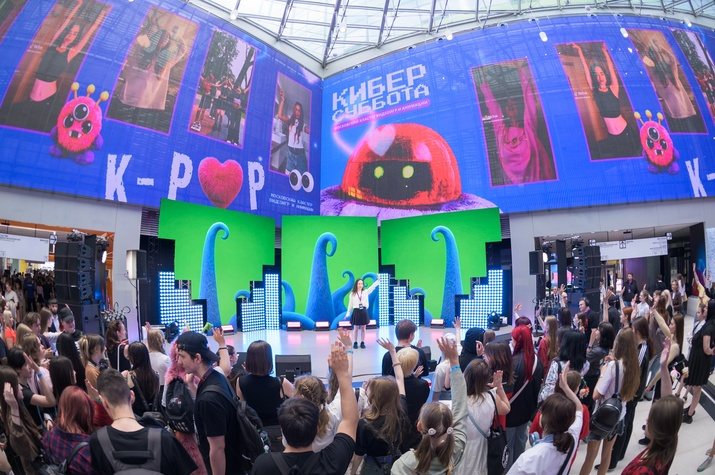
K-Pop Cyber Saturday in Moscow on May 23, 2026. Source: Gamemeca, May 2026; photo courtesy of the Moscow video game and animation cluster
The Cities Next Door
Calendars in the cities next to Russia are filling up. Taemin's world tour is set for Almaty Arena on December 6 and the Sports Palace in Tbilisi on December 9, and the same promoter lists Thirty Seconds to Mars in Tbilisi and Almaty in May 2027. In April 2025, Almaty Arena scheduled a K-pop concert pairing EXO's Chen with an orchestra. The city of Almaty put Deep Purple, Megadeth, Ricky Martin and Gorillaz on its calendar this year. Incheon has direct flights to Almaty, and Eastar Jet joined the route in April 2025.
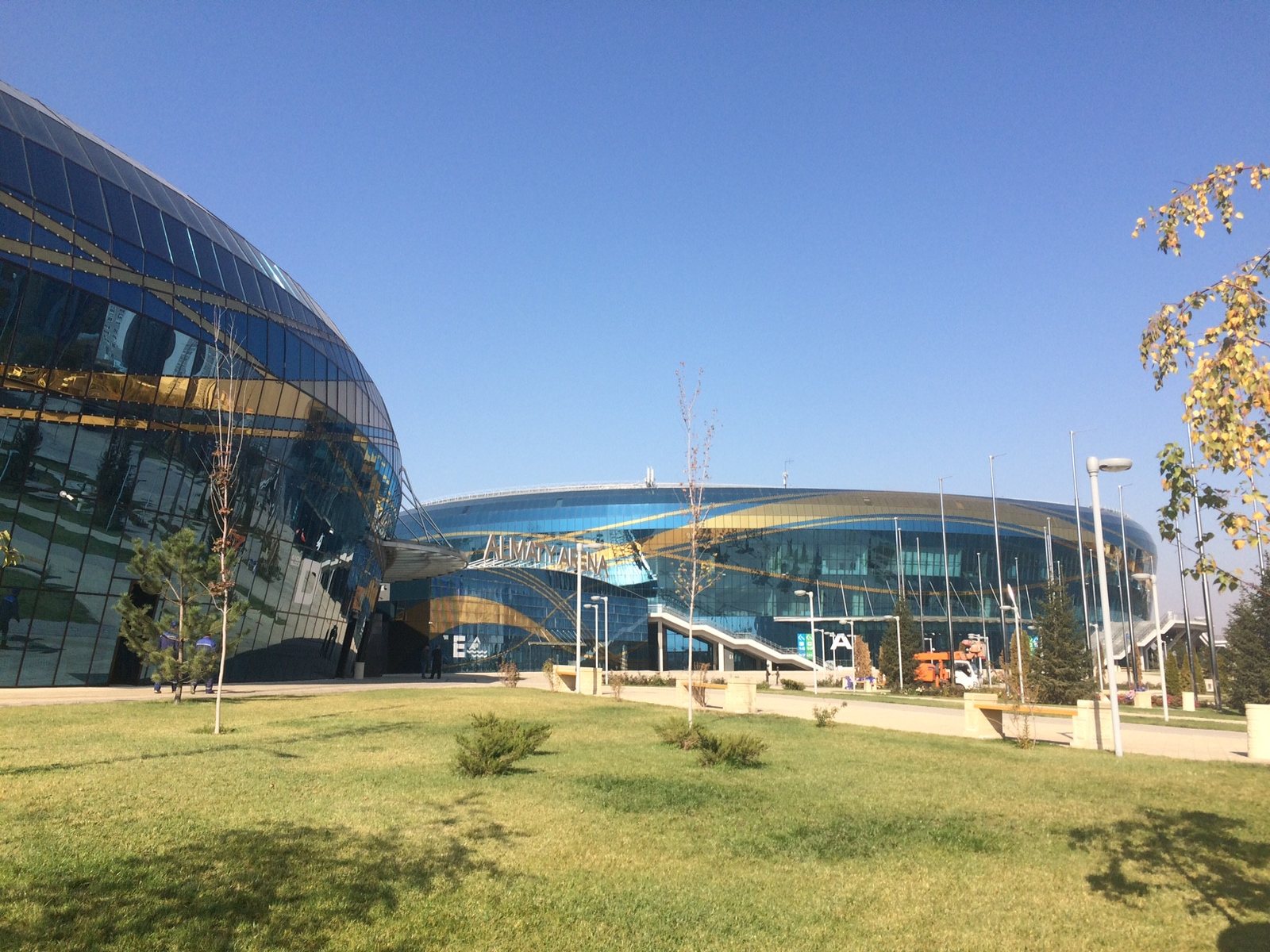
Almaty Arena (2017). Source: Photo by МаратД, CC BY-SA 4.0, Wikimedia Commons 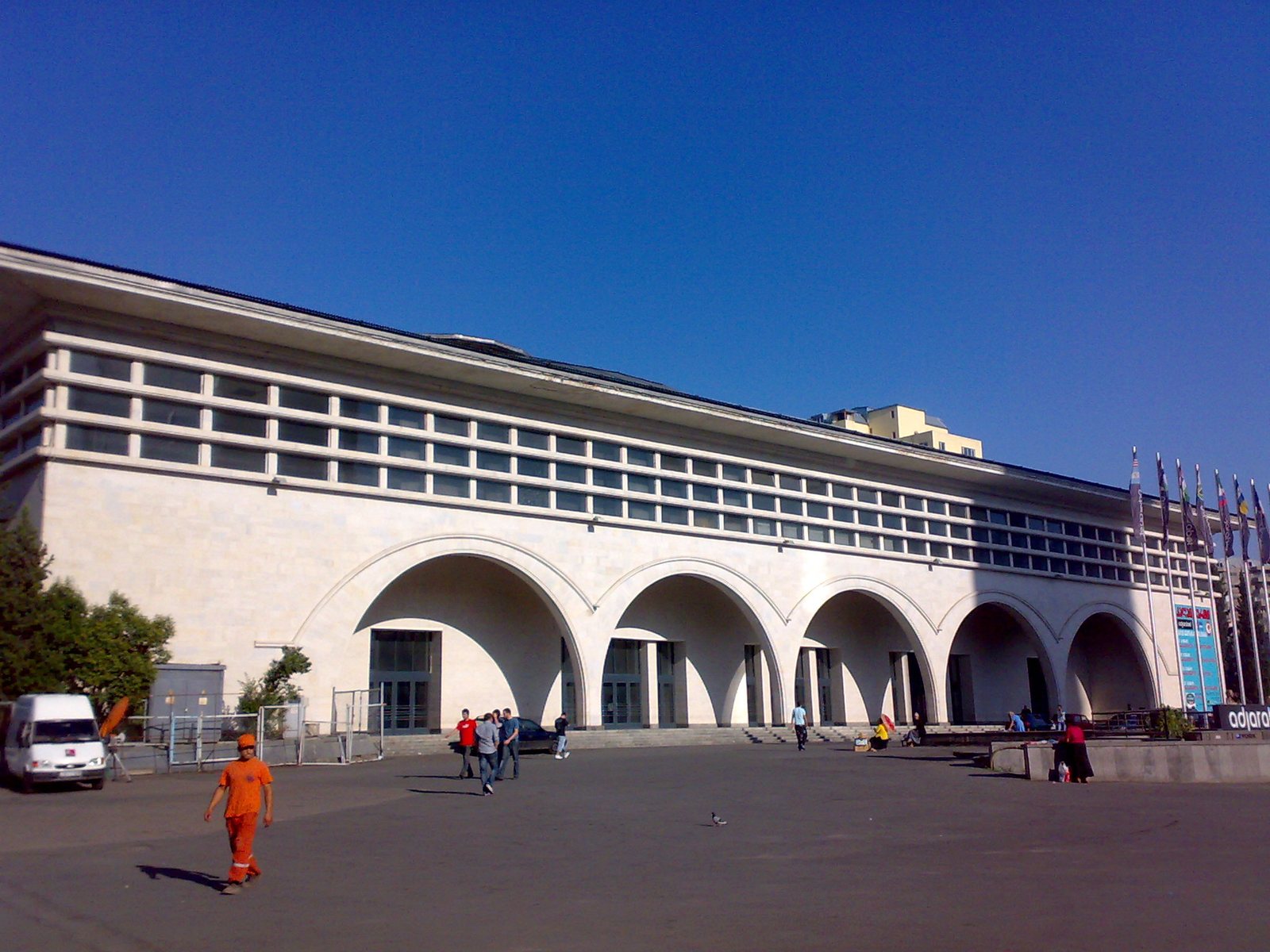
Tbilisi Sports Palace (2010). Source: Photo by BRUTE, CC BY 2.0, Wikimedia Commons
It is too early to call this a proven market. Kazakhstan's Hallyu favorability is 50.8%, 29th of 30, though unlike Russia it rose from 45.9% a year earlier. We found no public sales figures for K-pop shows and could not confirm any K-pop dates in Tashkent. The honest reading of this area is a cheaper testing ground than Russia.
Where Will K-pop and Electronic Music Meet First?
A new format emerged in Seoul this year. A four-member girl group that DJs its own set, linking singing, rap and choreography, played EDC Korea's circuitGROUNDS on October 3. We have yet to find a case of this format working in Russia or the CIS. The ingredients exist. VK Fest's electronic stage has run in St. Petersburg since 2015 and in Moscow since 2025, and this year Nizhny Novgorod had electronic and cosplay stages side by side. Almaty has First Fest and Satisfaction Fest.
Our view: in Russia, a daytime festival slot fits better than a late-night club. About 30% of the audience are minors, and the clubs are where news of venue raids tends to come from. For an electronic festival, the first door to knock on is Almaty.
The 2027 Math
Anyone receiving a proposal comes down to three questions. Which list is the paying company on? Can the artist live with a search record that says "performed in Russia"? Does the tour still work without Russia?
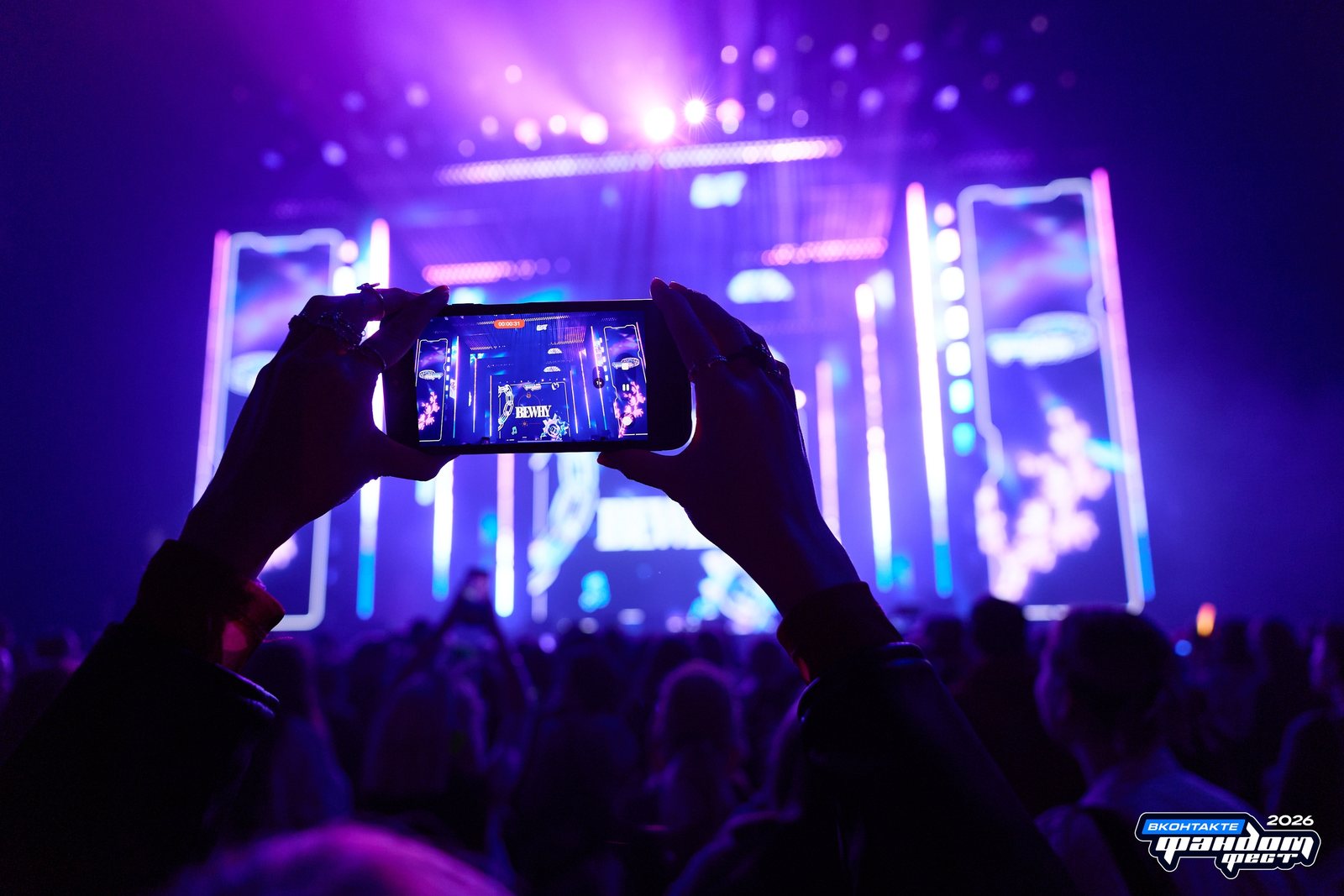
A fan films the stage at Fandom Fest 2026. Source: VK press photo, Oct. 12, 2026
Seventeen thousand people is not a number to dismiss. Still, the most honest gauge of this market's potential may not be ticket sales. It is whether, the morning after the show, you can post that stage photo on your global account.
Sources
- Fandom Fest Izvestia, 2026 results · Izvestia, program (Oct 5) · Izvestia, headliners (Aug 25) · VK press release (Sep 24) · travelto.ru, ticket prices · iguides, 2025 · OK!, 2024 · TASS, 2024 · allfest, 2023 · Vokrug TV, 2023 · Izvestia, VK Fest 2026
- Summer hip-hop shows Yandex Afisha, 82Edition · Portalbilet, July 6, 2025 · Yandex Afisha, Summer Heat · Rolld, VK Музыка Summer Stage · Izvestia, foreign artists (2025)
- Local-language covers TV Mag, W24 · Radio Versta, W24 tour · Finratings, Kandis
- Market IMI, the 2026 concert market · Kommersant, K-pop (2023) · TASS via Rambler, MTS study (2025) · 2026 Overseas Hallyu Survey · 2025 Overseas Hallyu Survey
- Sanctions EU Decision (CFSP) 2026/1709 · EU Decision (CFSP) 2024/1484 · The Moscow Times · Kod, VK's lawsuit
- Reputation and conditions in Russia KpopPost (Sep 2025) · KpopPost (Dec 2025) · Koreaboo · Meduza, Ye shows · UNITED24, venue rental and Fontanka · Billboard, cancellation · 7x7, Felice Rivarez
- Korea Ministry of Foreign Affairs travel safety site · Money Today, flight talks and the president's remarks · The Korea Times, unfriendly list (2022) · The Korea Times, Korea pavilion (2026) · Inven Global, K-Pop Cyber Saturday
- CIS and electronic music Park Live World · City of Almaty, 2026 events · zakazbiletov, K-pop Symphony · Travel Times, Eastar Jet · Snob, VK Fest electronic stage · Bandwagon, EDC Korea
- Photos Event photos and ticket guides come from VK's media materials in its October 12, 2026 press release and May 29 press release. The promotional image is from Yandex Afisha, and the K-Pop Cyber Saturday photo is from Gamemeca (courtesy of the Moscow video game and animation cluster). Some of these were cropped to fit. The four building photos come from Wikimedia Commons and were only resized: Europa building · Gazprom Arena · Almaty Arena · Tbilisi Sports Palace. Photographers and licenses appear in the captions.
Comments
Loading comments…